
Description
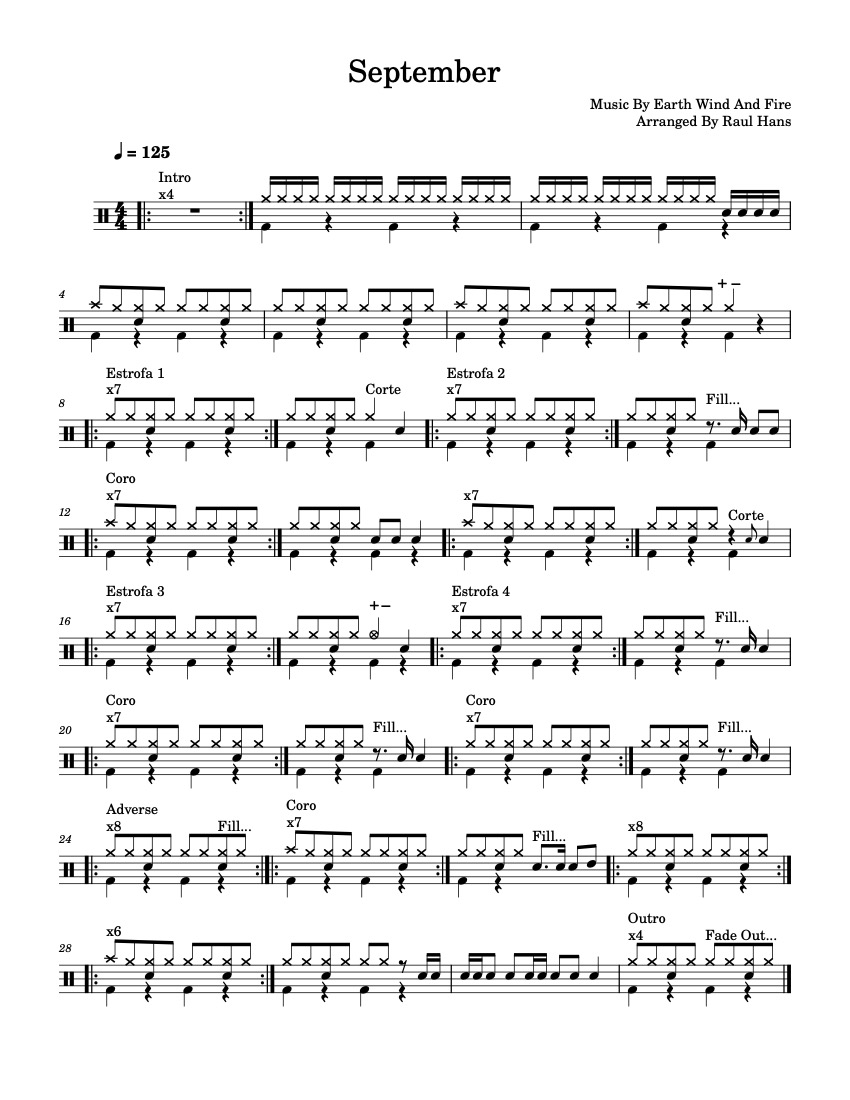
“September” by Earth, Wind & Fire is a disco, funk, and R&B song released as a single on November 18, 1978 through ARC/Columbia Records. It was one of two new songs included on the compilation album The Best of Earth, Wind & Fire, Vol. 1. The song was built from a musical sequence created by guitarist Al McKay, with lyrics by Maurice White and Allee Willis, and was produced by Maurice White.
Musically, “September” is driven by a tight funk groove built around a repeating four-measure pattern. The song is written in A major and uses a circle-of-fifths-based chord progression, giving it a bright, constantly moving feel. The arrangement combines funk rhythm guitar, bass, drums, percussion, piano, Rhodes electric piano, soprano saxophone, trumpets, trombone, strings, and layered vocals.
The core personnel includes Maurice White on lead and background vocals, Philip Bailey on lead and background vocals and congas, Al McKay on guitar and background vocals, Johnny Graham on guitar, Larry Dunn on Rhodes piano and piano, Verdine White on bass guitar, Fred White on drums, Ralph Johnson on drums and percussion, and Andrew Woolfolk on soprano saxophone. Additional musicians include Rahmlee Michael Davis and Michael Harris on trumpet, Louis Satterfield on trombone, and Paulinho da Costa on percussion, with Tom “Tom Tom 84” Washington handling string, horn, and background-vocal arrangements.
One of the most famous curiosities about the song is the phrase “ba-dee-ya.” Allee Willis initially disliked the nonsensical lyric and repeatedly asked Maurice White to replace it with something meaningful. White refused, and Willis later said that experience taught her an important songwriting lesson: sometimes the groove and the sound of a phrase matter more than its literal meaning.
Another long-running curiosity surrounds the lyric about the 21st night of September. Maurice White said he chose the date simply because it sounded good when sung. Years later, however, his wife Marilyn White explained that September 21 had been the expected birth date of their son Kahbran, and she interpreted the lyric as a private reference to their family.
“September” was added to The Best of Earth, Wind & Fire, Vol. 1 specifically to give the compilation new material, but it quickly became one of the band’s biggest hits. It reached No. 1 on Billboard’s Hot Soul Singles chart, No. 8 on the Billboard Hot 100, and No. 3 on the UK Singles Chart. It also became a Top 10 hit in several other countries.
The song’s reputation has continued to grow long after its original release. It was added to the Library of Congress National Recording Registry in 2018 for its cultural, historical, or aesthetic importance, and Rolling Stone ranked it No. 65 on its 2021 list of the 500 Greatest Songs of All Time.
Another interesting detail is that Earth, Wind & Fire later re-recorded the song as “December” for their 2014 Christmas album Holiday. That version keeps the original structure almost intact but changes the famous date reference to the 25th night of December, turning the song into a Christmas track.
“September” has also become deeply embedded in popular culture. It has appeared in films including Night at the Museum, Trolls, Polar, and Robot Dreams, and it has inspired internet memes, annual September 21 celebrations, football chants, remixes, covers, and social-media traditions. Its combination of infectious rhythm, bright horns, layered vocals, and an unforgettable chorus has helped it remain one of Earth, Wind & Fire’s most recognizable songs.
Lyrics
Do you remember the 21st night of September?
Love was changing the minds of pretenders
While chasing the clouds away
Our hearts were ringing
In the key that our souls were singing
As we danced in the night
Remember, how the stars stole the night away
Ah, ah, ah
Ba-dee-ya, say, do you remember?
Ba-dee-ya, dancin' in September
Ba-dee-ya, never was a cloudy day
Ba-du-da, ba-du-da, ba-du-da, ba-du
Ba-du-da, ba-du, ba-du-da, ba-du
Ba-du-da, ba-du, ba-du-da
My thoughts are with you
Holding hands with your heart to see you
Only blue talk and love
Remember, how we knew love was here to stay
Now December found the love
That we shared in September
Only blue talk and love
Remember, the true love we share today
Hey, hey, hey
Ba-dee-ya, say, do you remember?
Ba-dee-ya, dancin' in September
Ba-dee-ya, never was a cloudy day
There was a
Ba-dee-ya, say, do you remember?
Ba-dee-ya, dancin' in September
Ba-dee-ya, golden dreams were shiny days
The bell was ringing
Our souls were singing
Do you remember?
Never was a cloudy day, yeaw
There was a
Ba-dee-ya, say, do you remember?
Ba-dee-ya, dancin' in September
Ba-dee-ya, never was a cloudy day
There was a
Ba-dee-ya, say, do you remember?
Ba-dee-ya, dancin' in September
Ba-dee-ya, golden dreams were shiny days
Ba-dee-ya, dee-ya, dee-ya
Ba-dee-ya, dee-ya, dee-ya
Ba-dee-ya, dee-ya, dee-ya, dee-ya
Ba-dee-ya, dee-ya, dee-ya
Ba-dee-ya, dee-ya, dee-ya
Ba-dee-ya, dee-ya
Youtube Video
Social Links
Song
Description
“September” by Earth, Wind & Fire is a disco, funk, and R&B song released as a single on November 18, 1978 through ARC/Columbia Records. It was one of two new songs included on the compilation album The Best of Earth, Wind & Fire, Vol. 1. The song was built from a musical sequence created by guitarist Al McKay, with lyrics by Maurice White and Allee Willis, and was produced by Maurice White.
Musically, “September” is driven by a tight funk groove built around a repeating four-measure pattern. The song is written in A major and uses a circle-of-fifths-based chord progression, giving it a bright, constantly moving feel. The arrangement combines funk rhythm guitar, bass, drums, percussion, piano, Rhodes electric piano, soprano saxophone, trumpets, trombone, strings, and layered vocals.
The core personnel includes Maurice White on lead and background vocals, Philip Bailey on lead and background vocals and congas, Al McKay on guitar and background vocals, Johnny Graham on guitar, Larry Dunn on Rhodes piano and piano, Verdine White on bass guitar, Fred White on drums, Ralph Johnson on drums and percussion, and Andrew Woolfolk on soprano saxophone. Additional musicians include Rahmlee Michael Davis and Michael Harris on trumpet, Louis Satterfield on trombone, and Paulinho da Costa on percussion, with Tom “Tom Tom 84” Washington handling string, horn, and background-vocal arrangements.
One of the most famous curiosities about the song is the phrase “ba-dee-ya.” Allee Willis initially disliked the nonsensical lyric and repeatedly asked Maurice White to replace it with something meaningful. White refused, and Willis later said that experience taught her an important songwriting lesson: sometimes the groove and the sound of a phrase matter more than its literal meaning.
Another long-running curiosity surrounds the lyric about the 21st night of September. Maurice White said he chose the date simply because it sounded good when sung. Years later, however, his wife Marilyn White explained that September 21 had been the expected birth date of their son Kahbran, and she interpreted the lyric as a private reference to their family.
“September” was added to The Best of Earth, Wind & Fire, Vol. 1 specifically to give the compilation new material, but it quickly became one of the band’s biggest hits. It reached No. 1 on Billboard’s Hot Soul Singles chart, No. 8 on the Billboard Hot 100, and No. 3 on the UK Singles Chart. It also became a Top 10 hit in several other countries.
The song’s reputation has continued to grow long after its original release. It was added to the Library of Congress National Recording Registry in 2018 for its cultural, historical, or aesthetic importance, and Rolling Stone ranked it No. 65 on its 2021 list of the 500 Greatest Songs of All Time.
Another interesting detail is that Earth, Wind & Fire later re-recorded the song as “December” for their 2014 Christmas album Holiday. That version keeps the original structure almost intact but changes the famous date reference to the 25th night of December, turning the song into a Christmas track.
“September” has also become deeply embedded in popular culture. It has appeared in films including Night at the Museum, Trolls, Polar, and Robot Dreams, and it has inspired internet memes, annual September 21 celebrations, football chants, remixes, covers, and social-media traditions. Its combination of infectious rhythm, bright horns, layered vocals, and an unforgettable chorus has helped it remain one of Earth, Wind & Fire’s most recognizable songs.
Lyrics
Do you remember the 21st night of September?
Love was changing the minds of pretenders
While chasing the clouds away
Our hearts were ringing
In the key that our souls were singing
As we danced in the night
Remember, how the stars stole the night away
Ah, ah, ah
Ba-dee-ya, say, do you remember?
Ba-dee-ya, dancin' in September
Ba-dee-ya, never was a cloudy day
Ba-du-da, ba-du-da, ba-du-da, ba-du
Ba-du-da, ba-du, ba-du-da, ba-du
Ba-du-da, ba-du, ba-du-da
My thoughts are with you
Holding hands with your heart to see you
Only blue talk and love
Remember, how we knew love was here to stay
Now December found the love
That we shared in September
Only blue talk and love
Remember, the true love we share today
Hey, hey, hey
Ba-dee-ya, say, do you remember?
Ba-dee-ya, dancin' in September
Ba-dee-ya, never was a cloudy day
There was a
Ba-dee-ya, say, do you remember?
Ba-dee-ya, dancin' in September
Ba-dee-ya, golden dreams were shiny days
The bell was ringing
Our souls were singing
Do you remember?
Never was a cloudy day, yeaw
There was a
Ba-dee-ya, say, do you remember?
Ba-dee-ya, dancin' in September
Ba-dee-ya, never was a cloudy day
There was a
Ba-dee-ya, say, do you remember?
Ba-dee-ya, dancin' in September
Ba-dee-ya, golden dreams were shiny days
Ba-dee-ya, dee-ya, dee-ya
Ba-dee-ya, dee-ya, dee-ya
Ba-dee-ya, dee-ya, dee-ya, dee-ya
Ba-dee-ya, dee-ya, dee-ya
Ba-dee-ya, dee-ya, dee-ya
Ba-dee-ya, dee-ya