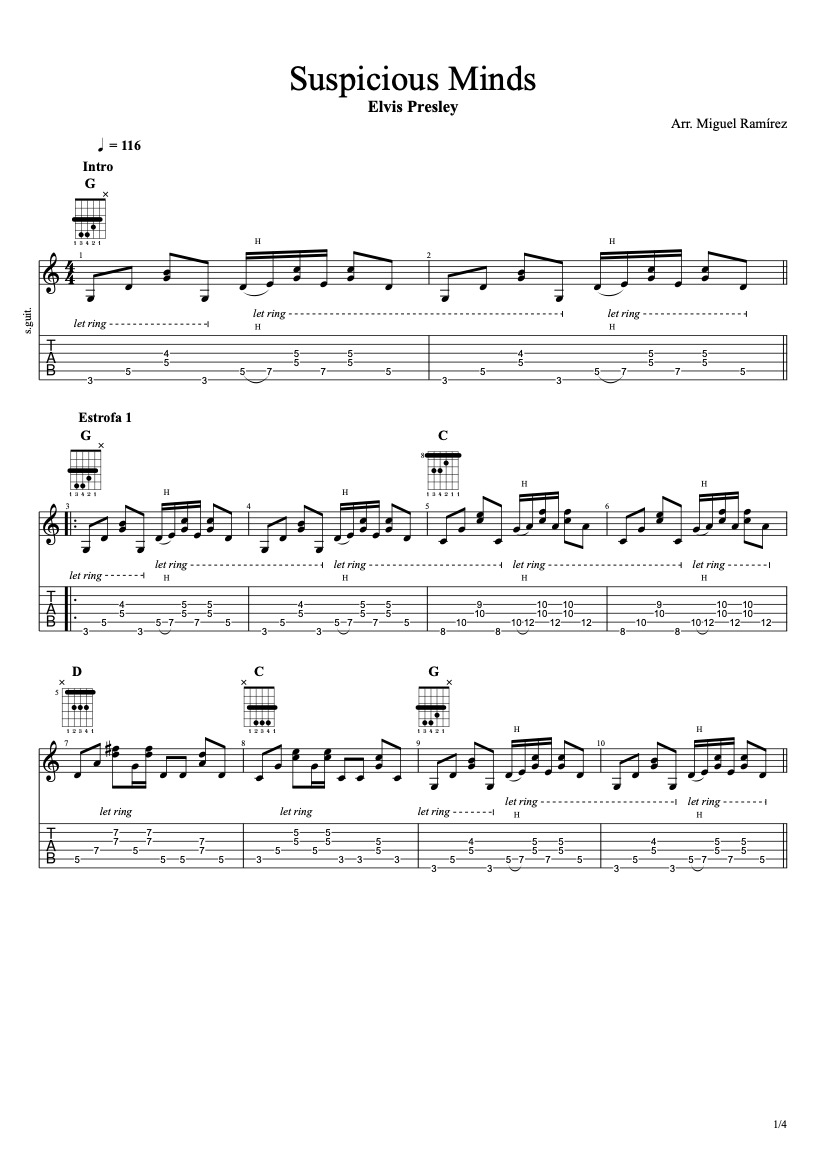

Description
“Suspicious Minds” by Elvis Presley is a rock, country rock, soul, and pop song released as a single on August 26, 1969 through RCA Victor, with “You’ll Think of Me” as the B-side. It was written by Mark James and produced by Chips Moman and Felton Jarvis. Presley recorded the song at American Sound Studio in Memphis in January 1969, during the sessions that also produced material for From Elvis in Memphis.
The song had actually been recorded first by its writer, Mark James, in 1968 for Scepter Records. His original version failed to chart, but producer Chips Moman and others later believed it could suit Elvis Presley, who was rebuilding his recording career after the success of his 1968 comeback television special. Presley heard the song and decided to record his own version.
Musically, “Suspicious Minds” has one of the richest arrangements in Presley’s late-1960s catalog. Its main instruments include electric guitar, bass guitar, piano, organ, drums, trumpets, trombones, bass trombone, and strings, supported by a large group of backing vocalists. The arrangement moves between rock, soul, country, and pop, giving the song both the drive of a rock single and the dramatic scale of a soul production.
The principal musicians included Reggie Young on guitar, Mike Leech on bass, Bobby Wood on piano, Bobby Emmons on organ, and Gene Chrisman on drums. The horn section included trumpeters Art Vasquez, Norman Prentice, and Bobby Shew, along with trombonists Archie LeCoque and Johnny Boice and bass trombonist Kenneth Adkins. Glen Spreen arranged the strings and horns, while Elvis provided the lead and harmony vocals and may also have played guitar.
The backing vocals are another important part of the recording. They were performed by Donna Jean Godchaux, Mary “Jeannie” Greene, Ginger Holladay, and Mary Holladay. Godchaux later became a member of the Grateful Dead, making her appearance on “Suspicious Minds” an interesting connection between Elvis Presley’s Memphis sessions and another major part of American rock history.
Lyrically, “Suspicious Minds” deals with a relationship being damaged by mistrust and jealousy. The narrator realizes that suspicion is trapping both partners in a destructive cycle and argues that they need to overcome their doubts if the relationship is going to survive. Mark James drew from his own complicated personal situation at the time, when he was married but still had feelings for a childhood sweetheart. He later described all three people involved as being caught in a situation they could not easily escape.
One musical curiosity is the way the song changes meter during the bridge. The arrangement shifts from 4/4 into a slower 6/8 section before returning to 4/4, creating a noticeable change in momentum. Combined with the rising strings, pumping horns, guitar, and backing choir, the change gives the song a dramatic feeling of tension and release.
Another famous curiosity is its unusual fade-out and fade-in ending. Near the end, the recording begins to fade at around 3:36, almost disappearing before suddenly returning at full volume and continuing for another section. RCA producer Felton Jarvis added this effect after the main recording sessions. Chips Moman strongly disliked the decision and later described it as unnecessary, but the unusual ending became one of the recording’s most recognizable features.
The recording itself almost ran into trouble because of a publishing dispute. Elvis Presley’s publishing representatives wanted a share of Chips Moman’s publishing rights before the song could be used. Moman resisted and reportedly threatened to stop the session. RCA executive Harry Jenkins eventually supported Moman, believing that “Suspicious Minds” had the potential to become a major hit.
Mark James was deliberately absent from Presley’s recording session. After briefly visiting the studio earlier, he felt that Elvis seemed uncomfortable having the original songwriter nearby and decided not to risk affecting the performance. When James first heard Presley’s version, he thought it sounded too slow, but after hearing the finished recording with its additional production and overdubs, he was impressed by the result.
“Suspicious Minds” became a major comeback hit for Elvis Presley. It reached No. 1 on the Billboard Hot 100 in November 1969 and became his final chart-topper on that ranking during his lifetime. It also reached No. 1 in countries including Australia, Austria, Belgium, Canada, New Zealand, South Africa, and Sweden, while peaking at No. 2 in the United Kingdom and Ireland.
The song is closely associated with Elvis Presley’s return to serious recording in Memphis after years focused heavily on film soundtracks. His American Sound Studio sessions combined rock, country, gospel, rhythm and blues, and soul, helping establish the mature musical direction that defined this stage of his career. “Suspicious Minds” became the biggest single to emerge from that period.
Its reputation continued to grow after its release. Presley’s RCA Victor recording was inducted into the Grammy Hall of Fame in 1999, and the song has repeatedly appeared on lists of his most important recordings. It was also successfully covered by other artists, including Fine Young Cannibals, whose 1986 version reached the UK Top 10.
Lyrics
We're caught in a trap
I can't walk out
Because I love you too much, baby
Why can't you see
What you're doin' to me
When you don't believe a word I say?
We can't go on together
With suspicious minds (with suspicious minds)
And we can't build our dreams
On suspicious minds
So if an old friend I know
Stops by to say hello
Would I still see suspicion in your eyes?
Here we go again
Asking where I've been
You can't see the tears are real, I'm cryin' (yes, I'm crying)
We can't go on together
With suspicious minds (suspicious minds)
And we can't build our dreams
On suspicious minds
Oh, let our love survive
I'll dry the tears from your eyes
Let's don't let a good thing die
When, honey, you know I've never lied to you
Mmm
Yeah, yeah
We're caught in a trap
I can't walk out
Because I love you too much, baby
Why can't you see
What you're doin' to me
When you don't believe a word I say?
Well, don't you know I'm
Caught in a trap?
I can't walk out
Because I love you too much, baby
Well, don't you know I'm
Caught in a trap?
I can't walk out
Because I love you too much, baby
Well, don't you know I'm
Caught in a trap?
I can't walk out
Because I love you too much, baby
Youtube Video
Social Links
Song
Description
“Suspicious Minds” by Elvis Presley is a rock, country rock, soul, and pop song released as a single on August 26, 1969 through RCA Victor, with “You’ll Think of Me” as the B-side. It was written by Mark James and produced by Chips Moman and Felton Jarvis. Presley recorded the song at American Sound Studio in Memphis in January 1969, during the sessions that also produced material for From Elvis in Memphis.
The song had actually been recorded first by its writer, Mark James, in 1968 for Scepter Records. His original version failed to chart, but producer Chips Moman and others later believed it could suit Elvis Presley, who was rebuilding his recording career after the success of his 1968 comeback television special. Presley heard the song and decided to record his own version.
Musically, “Suspicious Minds” has one of the richest arrangements in Presley’s late-1960s catalog. Its main instruments include electric guitar, bass guitar, piano, organ, drums, trumpets, trombones, bass trombone, and strings, supported by a large group of backing vocalists. The arrangement moves between rock, soul, country, and pop, giving the song both the drive of a rock single and the dramatic scale of a soul production.
The principal musicians included Reggie Young on guitar, Mike Leech on bass, Bobby Wood on piano, Bobby Emmons on organ, and Gene Chrisman on drums. The horn section included trumpeters Art Vasquez, Norman Prentice, and Bobby Shew, along with trombonists Archie LeCoque and Johnny Boice and bass trombonist Kenneth Adkins. Glen Spreen arranged the strings and horns, while Elvis provided the lead and harmony vocals and may also have played guitar.
The backing vocals are another important part of the recording. They were performed by Donna Jean Godchaux, Mary “Jeannie” Greene, Ginger Holladay, and Mary Holladay. Godchaux later became a member of the Grateful Dead, making her appearance on “Suspicious Minds” an interesting connection between Elvis Presley’s Memphis sessions and another major part of American rock history.
Lyrically, “Suspicious Minds” deals with a relationship being damaged by mistrust and jealousy. The narrator realizes that suspicion is trapping both partners in a destructive cycle and argues that they need to overcome their doubts if the relationship is going to survive. Mark James drew from his own complicated personal situation at the time, when he was married but still had feelings for a childhood sweetheart. He later described all three people involved as being caught in a situation they could not easily escape.
One musical curiosity is the way the song changes meter during the bridge. The arrangement shifts from 4/4 into a slower 6/8 section before returning to 4/4, creating a noticeable change in momentum. Combined with the rising strings, pumping horns, guitar, and backing choir, the change gives the song a dramatic feeling of tension and release.
Another famous curiosity is its unusual fade-out and fade-in ending. Near the end, the recording begins to fade at around 3:36, almost disappearing before suddenly returning at full volume and continuing for another section. RCA producer Felton Jarvis added this effect after the main recording sessions. Chips Moman strongly disliked the decision and later described it as unnecessary, but the unusual ending became one of the recording’s most recognizable features.
The recording itself almost ran into trouble because of a publishing dispute. Elvis Presley’s publishing representatives wanted a share of Chips Moman’s publishing rights before the song could be used. Moman resisted and reportedly threatened to stop the session. RCA executive Harry Jenkins eventually supported Moman, believing that “Suspicious Minds” had the potential to become a major hit.
Mark James was deliberately absent from Presley’s recording session. After briefly visiting the studio earlier, he felt that Elvis seemed uncomfortable having the original songwriter nearby and decided not to risk affecting the performance. When James first heard Presley’s version, he thought it sounded too slow, but after hearing the finished recording with its additional production and overdubs, he was impressed by the result.
“Suspicious Minds” became a major comeback hit for Elvis Presley. It reached No. 1 on the Billboard Hot 100 in November 1969 and became his final chart-topper on that ranking during his lifetime. It also reached No. 1 in countries including Australia, Austria, Belgium, Canada, New Zealand, South Africa, and Sweden, while peaking at No. 2 in the United Kingdom and Ireland.
The song is closely associated with Elvis Presley’s return to serious recording in Memphis after years focused heavily on film soundtracks. His American Sound Studio sessions combined rock, country, gospel, rhythm and blues, and soul, helping establish the mature musical direction that defined this stage of his career. “Suspicious Minds” became the biggest single to emerge from that period.
Its reputation continued to grow after its release. Presley’s RCA Victor recording was inducted into the Grammy Hall of Fame in 1999, and the song has repeatedly appeared on lists of his most important recordings. It was also successfully covered by other artists, including Fine Young Cannibals, whose 1986 version reached the UK Top 10.
Lyrics
We're caught in a trap
I can't walk out
Because I love you too much, baby
Why can't you see
What you're doin' to me
When you don't believe a word I say?
We can't go on together
With suspicious minds (with suspicious minds)
And we can't build our dreams
On suspicious minds
So if an old friend I know
Stops by to say hello
Would I still see suspicion in your eyes?
Here we go again
Asking where I've been
You can't see the tears are real, I'm cryin' (yes, I'm crying)
We can't go on together
With suspicious minds (suspicious minds)
And we can't build our dreams
On suspicious minds
Oh, let our love survive
I'll dry the tears from your eyes
Let's don't let a good thing die
When, honey, you know I've never lied to you
Mmm
Yeah, yeah
We're caught in a trap
I can't walk out
Because I love you too much, baby
Why can't you see
What you're doin' to me
When you don't believe a word I say?
Well, don't you know I'm
Caught in a trap?
I can't walk out
Because I love you too much, baby
Well, don't you know I'm
Caught in a trap?
I can't walk out
Because I love you too much, baby
Well, don't you know I'm
Caught in a trap?
I can't walk out
Because I love you too much, baby