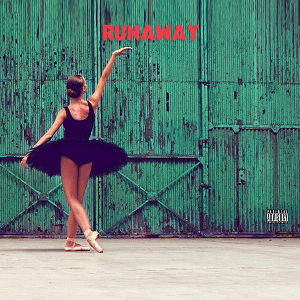

Description
“Runaway” by Kanye West is a progressive rap song featuring Pusha T, released as the second single from West’s fifth studio album, My Beautiful Dark Twisted Fantasy. It was released on October 4, 2010 through Roc-A-Fella Records and Def Jam Recordings. The song was written by Kanye West, Emile Haynie, Jeff Bhasker, Terrence Thornton, Mike Dean, Malik Yusef, Peter Phillips, and others, with West credited as the main producer and additional production from contributors including Haynie, Bhasker, and Dean.
The song was recorded in 2010 at Avex Recording Studio in Honolulu, Hawaii, during the sessions for My Beautiful Dark Twisted Fantasy. Its album version runs for 9 minutes and 7 seconds, while the single version is shorter, at 5 minutes and 39 seconds. The track is often considered one of the centerpieces of the album because of its length, emotional tone, and unusual structure.
Musically, “Runaway” is built around a sparse and memorable repeating piano riff, deep bass tones, sampled drums, electronic production, strings, cello, keyboards, vocal samples, and a long vocoder-heavy outro. The article describes the song as a layered progressive rap production with elements of pop, dance, R&B, trip hop, and art rock. Its opening begins with an isolated piano note before expanding into a darker, more dramatic arrangement.
The main credited musical contributors include Kanye West on vocals, writing, and production, Pusha T on vocals and writing, Jeff Bhasker on writing, keyboards, and additional production, Mike Dean on writing, additional production, and recording engineering, and Emile Haynie on writing and additional production. The track also features The-Dream on additional vocals, Tony Williams on background vocals, and Christopher Chorney on cello.
The song also uses notable samples. It contains a sample of “Expo 83” by Backyard Heavies and excerpts from Rick James’ “Live at Long Beach, CA, 1981.” The Rick James vocal sample, especially the repeated “Look at ya!” phrase, appears throughout the first half of the song and adds to its confrontational and self-aware atmosphere.
Lyrically, “Runaway” is a self-critical song about failed relationships, destructive behavior, public criticism, and West’s awareness of how he was perceived by the media. The song is famous for its chorus, where West offers a “toast” to flawed, selfish, and difficult people. Instead of defending himself directly, he turns criticism into a strange mix of apology, warning, confession, and performance.
One curiosity about the song is its connection to the 2009 MTV Video Music Awards, where Kanye West interrupted Taylor Swift’s acceptance speech. The Wikipedia article notes that “Runaway” generated major public interest before its release because many listeners connected its lyrics and themes to that controversy. West premiered the song at the 2010 MTV Video Music Awards, making the performance feel like both a comeback and a public act of self-reflection.
Another interesting detail is how the beat began. Producer Emile Haynie played West an early instrumental idea during a late-night studio session. West immediately reacted to its chord progression and structure, asked Haynie to load it into Pro Tools, and then developed the song further with Jeff Bhasker and other collaborators. Haynie later described the finished track as a “masterpiece,” while also crediting West for transforming the original idea into something much larger.
Pusha T’s verse also has an important backstory. West invited him to Hawaii to record the song and made him redo his verse several times because he wanted Pusha T to sound harsher and more unsympathetic. The article notes that this was unusual for Pusha T, who normally wrote and recorded verses quickly. West was so impressed by his work during the sessions that he later signed Pusha T to GOOD Music.
The extended outro is one of the song’s most distinctive elements. After the main verses and chorus, West ends the track with several minutes of wordless singing processed through vocoder and heavy distortion, accompanied by strings. Critics have interpreted this outro as a form of catharsis, turning unclear or distorted communication into emotional expression.
“Runaway” was widely acclaimed by critics and became one of Kanye West’s most celebrated songs. The article notes that several publications ranked it among the best songs of 2010, with critics praising its honesty, ambition, clean production, and emotional openness. Rolling Stone later ranked it No. 25 on its list of the 500 Greatest Songs of All Time in both 2021 and 2024.
Commercially, “Runaway” debuted and peaked at No. 12 on the Billboard Hot 100. It also reached No. 9 on the US Hot Rap Songs chart, No. 13 on the Canadian Hot 100, and later earned major certifications, including 6× Platinum in the United States, 2× Platinum in the United Kingdom, and 4× Platinum in New Zealand.
The song is also central to Runaway, Kanye West’s 35-minute short film connected to My Beautiful Dark Twisted Fantasy. The music video features ballet dancers performing elaborate choreography and was praised for its scale, visual design, and ambition. As of May 2026, the cut and extended versions of the video had received more than 230 million views on YouTube.
Another curiosity is the song’s later use in film, television, and advertising. “Runaway” appeared in a Bud Light Platinum Super Bowl commercial, the trailer for The Hangover Part III, a humorous performance in the trailer for The Night Before, and a piano-based version by Ramin Djawadi in the trailer for the second season of Westworld.
Lyrics
Look at ya, look at ya, look at ya, look at ya (look at ya)
Look at ya, look at ya, look at ya, look at ya (look at ya)
Look at ya, look at ya, look at ya, look at ya (look at ya)
Look at ya, look at ya, look at ya, look at ya
And I always find, yeah, I always find something wrong
You been puttin' up with my shit just way too long
I'm so gifted at finding what I don't like the most
So I think it's time for us to have a toast
Let's have a toast for the douchebags
Let's have a toast for the assholes
Let's have a toast for the scumbags
Every one of them that I know
Let's have a toast for the jerk-offs
That'll never take work off
Baby, I got a plan
Run away fast as you can
She find pictures in my email
I sent this bitch a picture of my dick
I don't know what it is with females
But I'm not too good at that shit
See, I could have me a good girl
And still be addicted to them hoodrats
And I just blame everything on you
At least you know that's what I'm good at
And I always find, yeah, I always find
Yeah, I always find something wrong
You been puttin' up with my shit just way too long
I'm so gifted at finding what I don't like the most
So I think it's time for us to have a toast
Let's have a toast for the douchebags
Let's have a toast for the assholes
Let's have a toast for the scumbags
Every one of them that I know
Let's have a toast for the jerk-offs
That'll never take work off
Baby, I got a plan
Run away fast as you can
Run away from me, baby
Ah, run away
Run away from me, baby (look at ya, look at ya, look at ya)
Run away
When it starts to get crazy (look at ya, look at ya, look at ya)
Then run away
Babe, I got a plan, run away as fast as you can
Run away from me, baby
Run away
Run away from me, baby (look at, look at, look at, look at, look at, look at, look at ya)
Run away
When it starts to get crazy (look at ya, look at ya, look at ya, look at ya)
Why can't she just run away?
Baby, I got a plan
Run away as fast as you can (look at ya, look at ya, look at ya)
Twenty-four seven, three sixty-five, pussy stays on my mind
I, I, I, I did it, alright, alright, I admit it
Now pick your next move, you could leave or live with it
Ichabod Crane with that motherfuckin' top off
Split and go where? Back to wearing knockoffs?
Haha, knock it off, Neimans, shop it off
Let's talk over mai tais, waitress, top it off
Hoes like vultures, wanna fly in your Freddy loafers
You can't blame 'em, they ain't never seen Versace sofas
Every bag, every blouse, every bracelet
Comes with a price tag, baby, face it
You should leave if you can't accept the basics
Plenty hoes in the baller-nigga matrix
Invisibly set, the Rolex is faceless
I'm just young, rich, and tasteless, P
Never was much of a romantic
I could never take the intimacy
And I know I did damage
'Cause the look in your eyes is killing me
I guess you knew of that advantage
'Cause you could blame me for everything
And I don't know how I'ma manage
If one day, you just up and leave
And I always find, yeah, I always find something wrong
You been puttin' up with my shit just way too long
I'm so gifted at finding what I don't like the most
So I think it's time for us to have a toast
Let's have a toast for the douchebags
Let's have a toast for the assholes
Let's have a toast for the scumbags
Every one of them that I know
Let's have a toast for the jerk-offs
That'll never take work off
Baby, I got a plan
Run away fast as you can
Youtube video
Songs links
Specification
“Runaway” by Kanye West is a progressive rap song featuring Pusha T, released as the second single from West’s fifth studio album, My Beautiful Dark Twisted Fantasy. It was released on October 4, 2010 through Roc-A-Fella Records and Def Jam Recordings. The song was written by Kanye West, Emile Haynie, Jeff Bhasker, Terrence Thornton, Mike Dean, Malik Yusef, Peter Phillips, and others, with West credited as the main producer and additional production from contributors including Haynie, Bhasker, and Dean.
The song was recorded in 2010 at Avex Recording Studio in Honolulu, Hawaii, during the sessions for My Beautiful Dark Twisted Fantasy. Its album version runs for 9 minutes and 7 seconds, while the single version is shorter, at 5 minutes and 39 seconds. The track is often considered one of the centerpieces of the album because of its length, emotional tone, and unusual structure.
Musically, “Runaway” is built around a sparse and memorable repeating piano riff, deep bass tones, sampled drums, electronic production, strings, cello, keyboards, vocal samples, and a long vocoder-heavy outro. The article describes the song as a layered progressive rap production with elements of pop, dance, R&B, trip hop, and art rock. Its opening begins with an isolated piano note before expanding into a darker, more dramatic arrangement.
The main credited musical contributors include Kanye West on vocals, writing, and production, Pusha T on vocals and writing, Jeff Bhasker on writing, keyboards, and additional production, Mike Dean on writing, additional production, and recording engineering, and Emile Haynie on writing and additional production. The track also features The-Dream on additional vocals, Tony Williams on background vocals, and Christopher Chorney on cello.
The song also uses notable samples. It contains a sample of “Expo 83” by Backyard Heavies and excerpts from Rick James’ “Live at Long Beach, CA, 1981.” The Rick James vocal sample, especially the repeated “Look at ya!” phrase, appears throughout the first half of the song and adds to its confrontational and self-aware atmosphere.
Lyrically, “Runaway” is a self-critical song about failed relationships, destructive behavior, public criticism, and West’s awareness of how he was perceived by the media. The song is famous for its chorus, where West offers a “toast” to flawed, selfish, and difficult people. Instead of defending himself directly, he turns criticism into a strange mix of apology, warning, confession, and performance.
One curiosity about the song is its connection to the 2009 MTV Video Music Awards, where Kanye West interrupted Taylor Swift’s acceptance speech. The Wikipedia article notes that “Runaway” generated major public interest before its release because many listeners connected its lyrics and themes to that controversy. West premiered the song at the 2010 MTV Video Music Awards, making the performance feel like both a comeback and a public act of self-reflection.
Another interesting detail is how the beat began. Producer Emile Haynie played West an early instrumental idea during a late-night studio session. West immediately reacted to its chord progression and structure, asked Haynie to load it into Pro Tools, and then developed the song further with Jeff Bhasker and other collaborators. Haynie later described the finished track as a “masterpiece,” while also crediting West for transforming the original idea into something much larger.
Pusha T’s verse also has an important backstory. West invited him to Hawaii to record the song and made him redo his verse several times because he wanted Pusha T to sound harsher and more unsympathetic. The article notes that this was unusual for Pusha T, who normally wrote and recorded verses quickly. West was so impressed by his work during the sessions that he later signed Pusha T to GOOD Music.
The extended outro is one of the song’s most distinctive elements. After the main verses and chorus, West ends the track with several minutes of wordless singing processed through vocoder and heavy distortion, accompanied by strings. Critics have interpreted this outro as a form of catharsis, turning unclear or distorted communication into emotional expression.
“Runaway” was widely acclaimed by critics and became one of Kanye West’s most celebrated songs. The article notes that several publications ranked it among the best songs of 2010, with critics praising its honesty, ambition, clean production, and emotional openness. Rolling Stone later ranked it No. 25 on its list of the 500 Greatest Songs of All Time in both 2021 and 2024.
Commercially, “Runaway” debuted and peaked at No. 12 on the Billboard Hot 100. It also reached No. 9 on the US Hot Rap Songs chart, No. 13 on the Canadian Hot 100, and later earned major certifications, including 6× Platinum in the United States, 2× Platinum in the United Kingdom, and 4× Platinum in New Zealand.
The song is also central to Runaway, Kanye West’s 35-minute short film connected to My Beautiful Dark Twisted Fantasy. The music video features ballet dancers performing elaborate choreography and was praised for its scale, visual design, and ambition. As of May 2026, the cut and extended versions of the video had received more than 230 million views on YouTube.
Another curiosity is the song’s later use in film, television, and advertising. “Runaway” appeared in a Bud Light Platinum Super Bowl commercial, the trailer for The Hangover Part III, a humorous performance in the trailer for The Night Before, and a piano-based version by Ramin Djawadi in the trailer for the second season of Westworld.
Specification
“Runaway” by Kanye West is a progressive rap song featuring Pusha T, released as the second single from West’s fifth studio album, My Beautiful Dark Twisted Fantasy. It was released on October 4, 2010 through Roc-A-Fella Records and Def Jam Recordings. The song was written by Kanye West, Emile Haynie, Jeff Bhasker, Terrence Thornton, Mike Dean, Malik Yusef, Peter Phillips, and others, with West credited as the main producer and additional production from contributors including Haynie, Bhasker, and Dean.
The song was recorded in 2010 at Avex Recording Studio in Honolulu, Hawaii, during the sessions for My Beautiful Dark Twisted Fantasy. Its album version runs for 9 minutes and 7 seconds, while the single version is shorter, at 5 minutes and 39 seconds. The track is often considered one of the centerpieces of the album because of its length, emotional tone, and unusual structure.
Musically, “Runaway” is built around a sparse and memorable repeating piano riff, deep bass tones, sampled drums, electronic production, strings, cello, keyboards, vocal samples, and a long vocoder-heavy outro. The article describes the song as a layered progressive rap production with elements of pop, dance, R&B, trip hop, and art rock. Its opening begins with an isolated piano note before expanding into a darker, more dramatic arrangement.
The main credited musical contributors include Kanye West on vocals, writing, and production, Pusha T on vocals and writing, Jeff Bhasker on writing, keyboards, and additional production, Mike Dean on writing, additional production, and recording engineering, and Emile Haynie on writing and additional production. The track also features The-Dream on additional vocals, Tony Williams on background vocals, and Christopher Chorney on cello.
The song also uses notable samples. It contains a sample of “Expo 83” by Backyard Heavies and excerpts from Rick James’ “Live at Long Beach, CA, 1981.” The Rick James vocal sample, especially the repeated “Look at ya!” phrase, appears throughout the first half of the song and adds to its confrontational and self-aware atmosphere.
Lyrically, “Runaway” is a self-critical song about failed relationships, destructive behavior, public criticism, and West’s awareness of how he was perceived by the media. The song is famous for its chorus, where West offers a “toast” to flawed, selfish, and difficult people. Instead of defending himself directly, he turns criticism into a strange mix of apology, warning, confession, and performance.
One curiosity about the song is its connection to the 2009 MTV Video Music Awards, where Kanye West interrupted Taylor Swift’s acceptance speech. The Wikipedia article notes that “Runaway” generated major public interest before its release because many listeners connected its lyrics and themes to that controversy. West premiered the song at the 2010 MTV Video Music Awards, making the performance feel like both a comeback and a public act of self-reflection.
Another interesting detail is how the beat began. Producer Emile Haynie played West an early instrumental idea during a late-night studio session. West immediately reacted to its chord progression and structure, asked Haynie to load it into Pro Tools, and then developed the song further with Jeff Bhasker and other collaborators. Haynie later described the finished track as a “masterpiece,” while also crediting West for transforming the original idea into something much larger.
Pusha T’s verse also has an important backstory. West invited him to Hawaii to record the song and made him redo his verse several times because he wanted Pusha T to sound harsher and more unsympathetic. The article notes that this was unusual for Pusha T, who normally wrote and recorded verses quickly. West was so impressed by his work during the sessions that he later signed Pusha T to GOOD Music.
The extended outro is one of the song’s most distinctive elements. After the main verses and chorus, West ends the track with several minutes of wordless singing processed through vocoder and heavy distortion, accompanied by strings. Critics have interpreted this outro as a form of catharsis, turning unclear or distorted communication into emotional expression.
“Runaway” was widely acclaimed by critics and became one of Kanye West’s most celebrated songs. The article notes that several publications ranked it among the best songs of 2010, with critics praising its honesty, ambition, clean production, and emotional openness. Rolling Stone later ranked it No. 25 on its list of the 500 Greatest Songs of All Time in both 2021 and 2024.
Commercially, “Runaway” debuted and peaked at No. 12 on the Billboard Hot 100. It also reached No. 9 on the US Hot Rap Songs chart, No. 13 on the Canadian Hot 100, and later earned major certifications, including 6× Platinum in the United States, 2× Platinum in the United Kingdom, and 4× Platinum in New Zealand.
The song is also central to Runaway, Kanye West’s 35-minute short film connected to My Beautiful Dark Twisted Fantasy. The music video features ballet dancers performing elaborate choreography and was praised for its scale, visual design, and ambition. As of May 2026, the cut and extended versions of the video had received more than 230 million views on YouTube.
Another curiosity is the song’s later use in film, television, and advertising. “Runaway” appeared in a Bud Light Platinum Super Bowl commercial, the trailer for The Hangover Part III, a humorous performance in the trailer for The Night Before, and a piano-based version by Ramin Djawadi in the trailer for the second season of Westworld.
Specification
“Runaway” by Kanye West is a progressive rap song featuring Pusha T, released as the second single from West’s fifth studio album, My Beautiful Dark Twisted Fantasy. It was released on October 4, 2010 through Roc-A-Fella Records and Def Jam Recordings. The song was written by Kanye West, Emile Haynie, Jeff Bhasker, Terrence Thornton, Mike Dean, Malik Yusef, Peter Phillips, and others, with West credited as the main producer and additional production from contributors including Haynie, Bhasker, and Dean.
The song was recorded in 2010 at Avex Recording Studio in Honolulu, Hawaii, during the sessions for My Beautiful Dark Twisted Fantasy. Its album version runs for 9 minutes and 7 seconds, while the single version is shorter, at 5 minutes and 39 seconds. The track is often considered one of the centerpieces of the album because of its length, emotional tone, and unusual structure.
Musically, “Runaway” is built around a sparse and memorable repeating piano riff, deep bass tones, sampled drums, electronic production, strings, cello, keyboards, vocal samples, and a long vocoder-heavy outro. The article describes the song as a layered progressive rap production with elements of pop, dance, R&B, trip hop, and art rock. Its opening begins with an isolated piano note before expanding into a darker, more dramatic arrangement.
The main credited musical contributors include Kanye West on vocals, writing, and production, Pusha T on vocals and writing, Jeff Bhasker on writing, keyboards, and additional production, Mike Dean on writing, additional production, and recording engineering, and Emile Haynie on writing and additional production. The track also features The-Dream on additional vocals, Tony Williams on background vocals, and Christopher Chorney on cello.
The song also uses notable samples. It contains a sample of “Expo 83” by Backyard Heavies and excerpts from Rick James’ “Live at Long Beach, CA, 1981.” The Rick James vocal sample, especially the repeated “Look at ya!” phrase, appears throughout the first half of the song and adds to its confrontational and self-aware atmosphere.
Lyrically, “Runaway” is a self-critical song about failed relationships, destructive behavior, public criticism, and West’s awareness of how he was perceived by the media. The song is famous for its chorus, where West offers a “toast” to flawed, selfish, and difficult people. Instead of defending himself directly, he turns criticism into a strange mix of apology, warning, confession, and performance.
One curiosity about the song is its connection to the 2009 MTV Video Music Awards, where Kanye West interrupted Taylor Swift’s acceptance speech. The Wikipedia article notes that “Runaway” generated major public interest before its release because many listeners connected its lyrics and themes to that controversy. West premiered the song at the 2010 MTV Video Music Awards, making the performance feel like both a comeback and a public act of self-reflection.
Another interesting detail is how the beat began. Producer Emile Haynie played West an early instrumental idea during a late-night studio session. West immediately reacted to its chord progression and structure, asked Haynie to load it into Pro Tools, and then developed the song further with Jeff Bhasker and other collaborators. Haynie later described the finished track as a “masterpiece,” while also crediting West for transforming the original idea into something much larger.
Pusha T’s verse also has an important backstory. West invited him to Hawaii to record the song and made him redo his verse several times because he wanted Pusha T to sound harsher and more unsympathetic. The article notes that this was unusual for Pusha T, who normally wrote and recorded verses quickly. West was so impressed by his work during the sessions that he later signed Pusha T to GOOD Music.
The extended outro is one of the song’s most distinctive elements. After the main verses and chorus, West ends the track with several minutes of wordless singing processed through vocoder and heavy distortion, accompanied by strings. Critics have interpreted this outro as a form of catharsis, turning unclear or distorted communication into emotional expression.
“Runaway” was widely acclaimed by critics and became one of Kanye West’s most celebrated songs. The article notes that several publications ranked it among the best songs of 2010, with critics praising its honesty, ambition, clean production, and emotional openness. Rolling Stone later ranked it No. 25 on its list of the 500 Greatest Songs of All Time in both 2021 and 2024.
Commercially, “Runaway” debuted and peaked at No. 12 on the Billboard Hot 100. It also reached No. 9 on the US Hot Rap Songs chart, No. 13 on the Canadian Hot 100, and later earned major certifications, including 6× Platinum in the United States, 2× Platinum in the United Kingdom, and 4× Platinum in New Zealand.
The song is also central to Runaway, Kanye West’s 35-minute short film connected to My Beautiful Dark Twisted Fantasy. The music video features ballet dancers performing elaborate choreography and was praised for its scale, visual design, and ambition. As of May 2026, the cut and extended versions of the video had received more than 230 million views on YouTube.
Another curiosity is the song’s later use in film, television, and advertising. “Runaway” appeared in a Bud Light Platinum Super Bowl commercial, the trailer for The Hangover Part III, a humorous performance in the trailer for The Night Before, and a piano-based version by Ramin Djawadi in the trailer for the second season of Westworld.