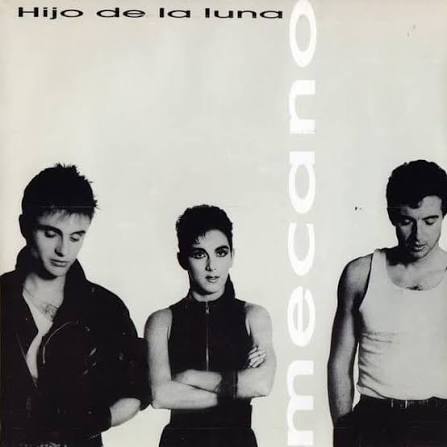

Description
“Hijo de la Luna” by Mecano is one of the most dramatic and memorable songs by the Spanish pop band Mecano. Released in 1986 as part of the album Entre el cielo y el suelo, the song was issued by Ariola and written by José María Cano. It was originally performed by Mecano, with Ana Torroja as lead singer, and became one of the band’s most successful songs across the Spanish-speaking world.
Musically, “Hijo de la Luna” blends piano rock, new wave, and synth-pop with a theatrical, almost cinematic atmosphere. The Wikipedia article does not provide a full instrumental personnel list, but the song’s style is strongly associated with piano, keyboards, synthesizer textures, bass, drums, and Ana Torroja’s distinctive lead vocal. Its elegant melody and dramatic arrangement give the track the feeling of a modern pop ballad mixed with folk storytelling.
The lyrics tell a tragic legend about a Roma woman who asks the Moon to help her marry the man she loves. In exchange, the Moon asks for the woman’s first-born child. When the baby is born with very pale skin and grey eyes, the father believes the child is not his and kills the mother. He then abandons the child on a mountain, where the Moon becomes the baby’s symbolic mother. This dark narrative gives the song a mythological and emotional depth that makes it stand out from typical 1980s pop songs.
One of the most powerful elements of “Hijo de la Luna” is the contrast between its beautiful melody and its tragic story. The chorus presents the Moon as a figure who wants to be a mother but cannot have a human child of her own. This creates a haunting emotional tension: the Moon is both magical and cruel, protective and demanding.
“Hijo de la Luna” achieved strong international success. The original Mecano version became popular across Spanish-speaking countries and also charted in several European markets, reaching No. 3 in the Netherlands, No. 6 in France, and No. 18 in Belgium’s Flanders chart. It was also certified Silver in France.
One curiosity about the song is its visual and literary atmosphere. The article notes that the Italian version, “Figlio della luna,” had a video aesthetic connected to Blood Wedding, the 1981 film by Carlos Saura based on Federico García Lorca’s work. This reinforces the song’s dramatic, folkloric, and tragic tone.
Another interesting detail is the success of later cover versions. In 1998, Dutch recording artist Loona released a cover of “Hijo de la Luna” from her album Lunita. Her version reached No. 1 in Germany, No. 2 in Switzerland, and was certified triple gold in Germany and gold in Switzerland. The song has also been covered by artists such as Montserrat Caballé, Sarah Brightman, Haggard, Stravaganzza, and Forestella.
Lyrics
Tonto el que no entienda
Cuenta una leyenda
Que una hembra gitana
Conjuró a la Luna hasta el amanecer
Llorando pedía al llegar el día
Desposar un calé
Tendrás a tu hombre, piel morena
Desde el cielo, habló la Luna llena
Pero a cambio quiero
El hijo primero que le engendres a él
Que quien su hijo inmola, para no estar sola
Poco le iba a querer
Luna, quieres ser madre
Y no encuentras querer que te haga mujer
Dime, Luna de plata
¿Qué pretendes hacer con un niño de piel?
Hijo de la Luna
De padre canela, nació un niño
Blanco como el lomo de un armiño
Con los ojos grises, en vez de aceituna
Niño albino de Luna
¡Maldita su estampa!
Este hijo es de un payo y yo no me lo callo
Luna, quieres ser madre
Y no encuentras querer que te haga mujer
Dime, Luna de plata
¿Qué pretendes hacer con un niño de piel?
Hijo de la Luna
Gitano, al creerse deshonrado
Se fue a su mujer, cuchillo en mano
¡De quién es el hijo! Me has engaña'o fijo
Y de muerte la hirió
Luego, se hizo al monte con el niño en brazos
Y allí le abandonó
Luna, quieres ser madre
Y no encuentras querer que te haga mujer
Dime, Luna de plata
¿Qué pretendes hacer con un niño de piel?
Hijo de la Luna
Y las noches que haya Luna llena
Será porque el niño esté de buenas
Y si el niño llora, menguará la Luna
Para hacerle una cuna
Y si el niño llora, menguará la Luna
Para hacerle una cuna
Youtube video
Songs links
Specification
“Hijo de la Luna” by Mecano is one of the most dramatic and memorable songs by the Spanish pop band Mecano. Released in 1986 as part of the album Entre el cielo y el suelo, the song was issued by Ariola and written by José María Cano. It was originally performed by Mecano, with Ana Torroja as lead singer, and became one of the band’s most successful songs across the Spanish-speaking world.
Musically, “Hijo de la Luna” blends piano rock, new wave, and synth-pop with a theatrical, almost cinematic atmosphere. The Wikipedia article does not provide a full instrumental personnel list, but the song’s style is strongly associated with piano, keyboards, synthesizer textures, bass, drums, and Ana Torroja’s distinctive lead vocal. Its elegant melody and dramatic arrangement give the track the feeling of a modern pop ballad mixed with folk storytelling.
The lyrics tell a tragic legend about a Roma woman who asks the Moon to help her marry the man she loves. In exchange, the Moon asks for the woman’s first-born child. When the baby is born with very pale skin and grey eyes, the father believes the child is not his and kills the mother. He then abandons the child on a mountain, where the Moon becomes the baby’s symbolic mother. This dark narrative gives the song a mythological and emotional depth that makes it stand out from typical 1980s pop songs.
One of the most powerful elements of “Hijo de la Luna” is the contrast between its beautiful melody and its tragic story. The chorus presents the Moon as a figure who wants to be a mother but cannot have a human child of her own. This creates a haunting emotional tension: the Moon is both magical and cruel, protective and demanding.
“Hijo de la Luna” achieved strong international success. The original Mecano version became popular across Spanish-speaking countries and also charted in several European markets, reaching No. 3 in the Netherlands, No. 6 in France, and No. 18 in Belgium’s Flanders chart. It was also certified Silver in France.
One curiosity about the song is its visual and literary atmosphere. The article notes that the Italian version, “Figlio della luna,” had a video aesthetic connected to Blood Wedding, the 1981 film by Carlos Saura based on Federico García Lorca’s work. This reinforces the song’s dramatic, folkloric, and tragic tone.
Another interesting detail is the success of later cover versions. In 1998, Dutch recording artist Loona released a cover of “Hijo de la Luna” from her album Lunita. Her version reached No. 1 in Germany, No. 2 in Switzerland, and was certified triple gold in Germany and gold in Switzerland. The song has also been covered by artists such as Montserrat Caballé, Sarah Brightman, Haggard, Stravaganzza, and Forestella.
Specification
“Hijo de la Luna” by Mecano is one of the most dramatic and memorable songs by the Spanish pop band Mecano. Released in 1986 as part of the album Entre el cielo y el suelo, the song was issued by Ariola and written by José María Cano. It was originally performed by Mecano, with Ana Torroja as lead singer, and became one of the band’s most successful songs across the Spanish-speaking world.
Musically, “Hijo de la Luna” blends piano rock, new wave, and synth-pop with a theatrical, almost cinematic atmosphere. The Wikipedia article does not provide a full instrumental personnel list, but the song’s style is strongly associated with piano, keyboards, synthesizer textures, bass, drums, and Ana Torroja’s distinctive lead vocal. Its elegant melody and dramatic arrangement give the track the feeling of a modern pop ballad mixed with folk storytelling.
The lyrics tell a tragic legend about a Roma woman who asks the Moon to help her marry the man she loves. In exchange, the Moon asks for the woman’s first-born child. When the baby is born with very pale skin and grey eyes, the father believes the child is not his and kills the mother. He then abandons the child on a mountain, where the Moon becomes the baby’s symbolic mother. This dark narrative gives the song a mythological and emotional depth that makes it stand out from typical 1980s pop songs.
One of the most powerful elements of “Hijo de la Luna” is the contrast between its beautiful melody and its tragic story. The chorus presents the Moon as a figure who wants to be a mother but cannot have a human child of her own. This creates a haunting emotional tension: the Moon is both magical and cruel, protective and demanding.
“Hijo de la Luna” achieved strong international success. The original Mecano version became popular across Spanish-speaking countries and also charted in several European markets, reaching No. 3 in the Netherlands, No. 6 in France, and No. 18 in Belgium’s Flanders chart. It was also certified Silver in France.
One curiosity about the song is its visual and literary atmosphere. The article notes that the Italian version, “Figlio della luna,” had a video aesthetic connected to Blood Wedding, the 1981 film by Carlos Saura based on Federico García Lorca’s work. This reinforces the song’s dramatic, folkloric, and tragic tone.
Another interesting detail is the success of later cover versions. In 1998, Dutch recording artist Loona released a cover of “Hijo de la Luna” from her album Lunita. Her version reached No. 1 in Germany, No. 2 in Switzerland, and was certified triple gold in Germany and gold in Switzerland. The song has also been covered by artists such as Montserrat Caballé, Sarah Brightman, Haggard, Stravaganzza, and Forestella.
Specification
“Hijo de la Luna” by Mecano is one of the most dramatic and memorable songs by the Spanish pop band Mecano. Released in 1986 as part of the album Entre el cielo y el suelo, the song was issued by Ariola and written by José María Cano. It was originally performed by Mecano, with Ana Torroja as lead singer, and became one of the band’s most successful songs across the Spanish-speaking world.
Musically, “Hijo de la Luna” blends piano rock, new wave, and synth-pop with a theatrical, almost cinematic atmosphere. The Wikipedia article does not provide a full instrumental personnel list, but the song’s style is strongly associated with piano, keyboards, synthesizer textures, bass, drums, and Ana Torroja’s distinctive lead vocal. Its elegant melody and dramatic arrangement give the track the feeling of a modern pop ballad mixed with folk storytelling.
The lyrics tell a tragic legend about a Roma woman who asks the Moon to help her marry the man she loves. In exchange, the Moon asks for the woman’s first-born child. When the baby is born with very pale skin and grey eyes, the father believes the child is not his and kills the mother. He then abandons the child on a mountain, where the Moon becomes the baby’s symbolic mother. This dark narrative gives the song a mythological and emotional depth that makes it stand out from typical 1980s pop songs.
One of the most powerful elements of “Hijo de la Luna” is the contrast between its beautiful melody and its tragic story. The chorus presents the Moon as a figure who wants to be a mother but cannot have a human child of her own. This creates a haunting emotional tension: the Moon is both magical and cruel, protective and demanding.
“Hijo de la Luna” achieved strong international success. The original Mecano version became popular across Spanish-speaking countries and also charted in several European markets, reaching No. 3 in the Netherlands, No. 6 in France, and No. 18 in Belgium’s Flanders chart. It was also certified Silver in France.
One curiosity about the song is its visual and literary atmosphere. The article notes that the Italian version, “Figlio della luna,” had a video aesthetic connected to Blood Wedding, the 1981 film by Carlos Saura based on Federico García Lorca’s work. This reinforces the song’s dramatic, folkloric, and tragic tone.
Another interesting detail is the success of later cover versions. In 1998, Dutch recording artist Loona released a cover of “Hijo de la Luna” from her album Lunita. Her version reached No. 1 in Germany, No. 2 in Switzerland, and was certified triple gold in Germany and gold in Switzerland. The song has also been covered by artists such as Montserrat Caballé, Sarah Brightman, Haggard, Stravaganzza, and Forestella.