
Description
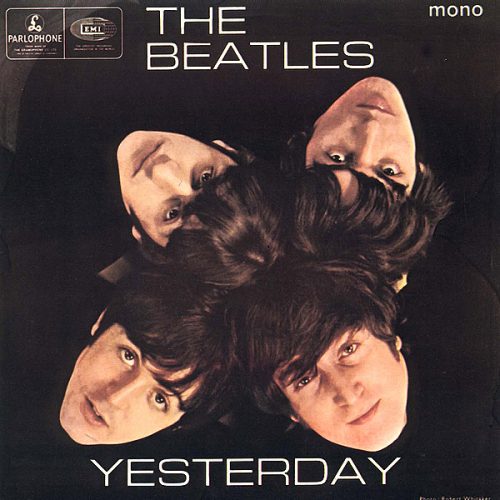
“Yesterday” by The Beatles is one of the most famous ballads in popular music history and one of the most covered songs ever recorded. Written by Paul McCartney and credited to Lennon–McCartney, the song was first released on the Beatles’ album Help! in August 1965. In the United States, it was issued as a single on 13 September 1965 by Capitol Records, while in the United Kingdom it appeared on the Yesterday EP in 1966 and was later released as a single by Parlophone in 1976. The track was produced by George Martin.
Musically, “Yesterday” is a delicate chamber pop ballad with an unusually sparse arrangement for a Beatles recording. The main instruments are Paul McCartney’s acoustic guitar and a classical string quartet, with McCartney as the only Beatle performing on the final recording. He played an Epiphone Texan steel-string acoustic guitar, while the string quartet added violin, viola, and cello textures that gave the song its melancholic, timeless character.
The lyrics are often interpreted as a song about lost love, regret, and emotional distance. The narrator looks back to a happier time when his troubles felt far away, before a sudden change left him alone and uncertain. Although the song is widely heard as romantic heartbreak, McCartney later suggested that the lyric about saying something wrong may also connect, unconsciously, to memories of his mother, Mary McCartney.
“Yesterday” became a major success in the United States, reaching No. 1 on the Billboard Hot 100. It was so different from the Beatles’ usual group sound that the band chose not to release it as a UK single at the time, because they felt it did not fully represent their image as a band. Despite that, other artists quickly recorded their own versions, helping the song become a modern standard.
One of the most famous curiosities about “Yesterday” is its origin. McCartney said the melody came to him in a dream while he was staying at the Wimpole Street home of his girlfriend Jane Asher’s family. When he woke up, he went straight to the piano to make sure he would not forget it. For a while, he worried he had unconsciously copied another song, so he played it to people in the music business to check whether anyone recognized it.
Another famous detail is the song’s working title: “Scrambled Eggs.” Before the final lyrics were written, McCartney used joke placeholder words beginning with “Scrambled eggs / Oh my baby how I love your legs.” The final title and lyrics came later, after McCartney worked on the song during a trip to Portugal in 1965.
The recording also marked an important moment in Beatles history. “Yesterday” was essentially the group’s first solo performance, because only McCartney appears on the finished track. Its use of a string quartet was also one of the Beatles’ first major steps toward more sophisticated arrangements and outside session musicians, foreshadowing the band’s later studio experimentation.
The legacy of “Yesterday” is enormous. With around 2,200 cover versions, it is one of the most covered songs in recorded music history. It was inducted into the Grammy Hall of Fame in 1997, voted the best song of the 20th century in a 1999 BBC Radio 2 poll, and named the No. 1 pop song of all time by MTV and Rolling Stone in 2000.
Lyrics
Yesterday
All my troubles seemed so far away
Now it looks as though they're here to stay
Oh, I believe in yesterday
Suddenly
I'm not half the man I used to be
There's a shadow hanging over me
Oh, yesterday came suddenly
Why she had to go? I don't know
She wouldn't say
I said something wrong, now I long
For yesterday
Yesterday
Love was such an easy game to play
Now I need a place to hide away
Oh, I believe in yesterday
Why she had to go? I don't know
She wouldn't say
I said something wrong, now I long
For yesterday
Yesterday
Love was such an easy game to play
Now I need a place to hide away
Oh, I believe in yesterday
Youtube video
Songs links
Specification
“Yesterday” by The Beatles is one of the most famous ballads in popular music history and one of the most covered songs ever recorded. Written by Paul McCartney and credited to Lennon–McCartney, the song was first released on the Beatles’ album Help! in August 1965. In the United States, it was issued as a single on 13 September 1965 by Capitol Records, while in the United Kingdom it appeared on the Yesterday EP in 1966 and was later released as a single by Parlophone in 1976. The track was produced by George Martin.
Musically, “Yesterday” is a delicate chamber pop ballad with an unusually sparse arrangement for a Beatles recording. The main instruments are Paul McCartney’s acoustic guitar and a classical string quartet, with McCartney as the only Beatle performing on the final recording. He played an Epiphone Texan steel-string acoustic guitar, while the string quartet added violin, viola, and cello textures that gave the song its melancholic, timeless character.
The lyrics are often interpreted as a song about lost love, regret, and emotional distance. The narrator looks back to a happier time when his troubles felt far away, before a sudden change left him alone and uncertain. Although the song is widely heard as romantic heartbreak, McCartney later suggested that the lyric about saying something wrong may also connect, unconsciously, to memories of his mother, Mary McCartney.
“Yesterday” became a major success in the United States, reaching No. 1 on the Billboard Hot 100. It was so different from the Beatles’ usual group sound that the band chose not to release it as a UK single at the time, because they felt it did not fully represent their image as a band. Despite that, other artists quickly recorded their own versions, helping the song become a modern standard.
One of the most famous curiosities about “Yesterday” is its origin. McCartney said the melody came to him in a dream while he was staying at the Wimpole Street home of his girlfriend Jane Asher’s family. When he woke up, he went straight to the piano to make sure he would not forget it. For a while, he worried he had unconsciously copied another song, so he played it to people in the music business to check whether anyone recognized it.
Another famous detail is the song’s working title: “Scrambled Eggs.” Before the final lyrics were written, McCartney used joke placeholder words beginning with “Scrambled eggs / Oh my baby how I love your legs.” The final title and lyrics came later, after McCartney worked on the song during a trip to Portugal in 1965.
The recording also marked an important moment in Beatles history. “Yesterday” was essentially the group’s first solo performance, because only McCartney appears on the finished track. Its use of a string quartet was also one of the Beatles’ first major steps toward more sophisticated arrangements and outside session musicians, foreshadowing the band’s later studio experimentation.
The legacy of “Yesterday” is enormous. With around 2,200 cover versions, it is one of the most covered songs in recorded music history. It was inducted into the Grammy Hall of Fame in 1997, voted the best song of the 20th century in a 1999 BBC Radio 2 poll, and named the No. 1 pop song of all time by MTV and Rolling Stone in 2000.
Specification
“Yesterday” by The Beatles is one of the most famous ballads in popular music history and one of the most covered songs ever recorded. Written by Paul McCartney and credited to Lennon–McCartney, the song was first released on the Beatles’ album Help! in August 1965. In the United States, it was issued as a single on 13 September 1965 by Capitol Records, while in the United Kingdom it appeared on the Yesterday EP in 1966 and was later released as a single by Parlophone in 1976. The track was produced by George Martin.
Musically, “Yesterday” is a delicate chamber pop ballad with an unusually sparse arrangement for a Beatles recording. The main instruments are Paul McCartney’s acoustic guitar and a classical string quartet, with McCartney as the only Beatle performing on the final recording. He played an Epiphone Texan steel-string acoustic guitar, while the string quartet added violin, viola, and cello textures that gave the song its melancholic, timeless character.
The lyrics are often interpreted as a song about lost love, regret, and emotional distance. The narrator looks back to a happier time when his troubles felt far away, before a sudden change left him alone and uncertain. Although the song is widely heard as romantic heartbreak, McCartney later suggested that the lyric about saying something wrong may also connect, unconsciously, to memories of his mother, Mary McCartney.
“Yesterday” became a major success in the United States, reaching No. 1 on the Billboard Hot 100. It was so different from the Beatles’ usual group sound that the band chose not to release it as a UK single at the time, because they felt it did not fully represent their image as a band. Despite that, other artists quickly recorded their own versions, helping the song become a modern standard.
One of the most famous curiosities about “Yesterday” is its origin. McCartney said the melody came to him in a dream while he was staying at the Wimpole Street home of his girlfriend Jane Asher’s family. When he woke up, he went straight to the piano to make sure he would not forget it. For a while, he worried he had unconsciously copied another song, so he played it to people in the music business to check whether anyone recognized it.
Another famous detail is the song’s working title: “Scrambled Eggs.” Before the final lyrics were written, McCartney used joke placeholder words beginning with “Scrambled eggs / Oh my baby how I love your legs.” The final title and lyrics came later, after McCartney worked on the song during a trip to Portugal in 1965.
The recording also marked an important moment in Beatles history. “Yesterday” was essentially the group’s first solo performance, because only McCartney appears on the finished track. Its use of a string quartet was also one of the Beatles’ first major steps toward more sophisticated arrangements and outside session musicians, foreshadowing the band’s later studio experimentation.
The legacy of “Yesterday” is enormous. With around 2,200 cover versions, it is one of the most covered songs in recorded music history. It was inducted into the Grammy Hall of Fame in 1997, voted the best song of the 20th century in a 1999 BBC Radio 2 poll, and named the No. 1 pop song of all time by MTV and Rolling Stone in 2000.
Specification
“Yesterday” by The Beatles is one of the most famous ballads in popular music history and one of the most covered songs ever recorded. Written by Paul McCartney and credited to Lennon–McCartney, the song was first released on the Beatles’ album Help! in August 1965. In the United States, it was issued as a single on 13 September 1965 by Capitol Records, while in the United Kingdom it appeared on the Yesterday EP in 1966 and was later released as a single by Parlophone in 1976. The track was produced by George Martin.
Musically, “Yesterday” is a delicate chamber pop ballad with an unusually sparse arrangement for a Beatles recording. The main instruments are Paul McCartney’s acoustic guitar and a classical string quartet, with McCartney as the only Beatle performing on the final recording. He played an Epiphone Texan steel-string acoustic guitar, while the string quartet added violin, viola, and cello textures that gave the song its melancholic, timeless character.
The lyrics are often interpreted as a song about lost love, regret, and emotional distance. The narrator looks back to a happier time when his troubles felt far away, before a sudden change left him alone and uncertain. Although the song is widely heard as romantic heartbreak, McCartney later suggested that the lyric about saying something wrong may also connect, unconsciously, to memories of his mother, Mary McCartney.
“Yesterday” became a major success in the United States, reaching No. 1 on the Billboard Hot 100. It was so different from the Beatles’ usual group sound that the band chose not to release it as a UK single at the time, because they felt it did not fully represent their image as a band. Despite that, other artists quickly recorded their own versions, helping the song become a modern standard.
One of the most famous curiosities about “Yesterday” is its origin. McCartney said the melody came to him in a dream while he was staying at the Wimpole Street home of his girlfriend Jane Asher’s family. When he woke up, he went straight to the piano to make sure he would not forget it. For a while, he worried he had unconsciously copied another song, so he played it to people in the music business to check whether anyone recognized it.
Another famous detail is the song’s working title: “Scrambled Eggs.” Before the final lyrics were written, McCartney used joke placeholder words beginning with “Scrambled eggs / Oh my baby how I love your legs.” The final title and lyrics came later, after McCartney worked on the song during a trip to Portugal in 1965.
The recording also marked an important moment in Beatles history. “Yesterday” was essentially the group’s first solo performance, because only McCartney appears on the finished track. Its use of a string quartet was also one of the Beatles’ first major steps toward more sophisticated arrangements and outside session musicians, foreshadowing the band’s later studio experimentation.
The legacy of “Yesterday” is enormous. With around 2,200 cover versions, it is one of the most covered songs in recorded music history. It was inducted into the Grammy Hall of Fame in 1997, voted the best song of the 20th century in a 1999 BBC Radio 2 poll, and named the No. 1 pop song of all time by MTV and Rolling Stone in 2000.