
Description
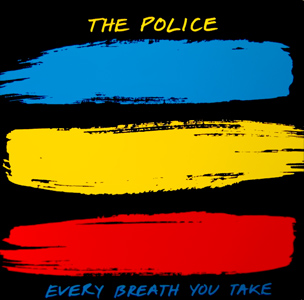
“Every Breath You Take” by The Police is one of the most famous pop rock and new wave songs of the 1980s, and the signature hit of the English rock band. Released on 9 May 1983 as a single from their fifth and final studio album, Synchronicity, the song was issued by A&M Records, with “Murder by Numbers” as the B-side. It was written by Sting and produced by Hugh Padgham and The Police.
Musically, “Every Breath You Take” combines pop rock, new wave, and power ballad elements. The song is built around a hypnotic guitar pattern, steady bass, restrained drums, piano, synthesizers, and Sting’s calm but intense lead vocal. The main personnel includes Sting on lead vocals, backing vocals, bass, piano, and synthesizers, Andy Summers on electric guitar and backing vocals, and Stewart Copeland on drums and drum machine.
One of the most recognizable elements of the song is Andy Summers’ guitar part. According to the article, Summers created a distinctive guitar arrangement inspired by Béla Bartók, and recorded it in a single take after Sting simply told him to “do your thing.” That guitar line became the central musical identity of the song.
Although many listeners interpret “Every Breath You Take” as a romantic love song, its meaning is much darker. Sting wrote it during the breakdown of his marriage to Frances Tomelty, and later explained that the lyrics are about obsession, jealousy, control, surveillance, and a possessive figure watching someone’s every move. This contrast between its smooth melody and unsettling lyrics is one of the reasons the song remains so fascinating.
“Every Breath You Take” became the biggest hit of 1983. It topped the Billboard Hot 100 for eight weeks, becoming The Police’s only No. 1 single on that chart. It also reached No. 1 in the United Kingdom, Canada, Ireland, South Africa, and other countries. The song won Song of the Year at the 1984 Grammy Awards for Sting, while The Police won Best Pop Performance by a Duo or Group with Vocals.
One curiosity about the song is that Sting reportedly woke up in the middle of the night with the opening line in his head, sat down at the piano, and wrote the song quickly. He later said he was surprised that many people saw it as comforting or romantic, when he considered it “sinister” and connected to themes of Big Brother, surveillance, and control.
Another interesting detail is that the recording process was tense. The article describes conflicts between the band members, especially between Sting and Stewart Copeland, during the sessions. Despite those difficulties, the final arrangement became the band’s most commercially successful recording.
The music video, directed by Godley & Creme, was filmed in black and white and shows the band performing in a dark ballroom with a pianist and string section. Its cinematic style helped the song become a major MTV-era success and was later recognized by MTV, Rolling Stone, and VH1 as one of the best music videos of all time.
The song also had a major afterlife in pop and hip-hop. Puff Daddy’s 1997 tribute song “I’ll Be Missing You” sampled the guitar, drum, and bass from “Every Breath You Take” and interpolated its chorus, bringing the track to a new generation of listeners.
Lyrics
Every breath you take
And every move you make
Every bond you break
Every step you take
I'll be watching you
Every single day
Every word you say
Every game you play
Every night you stay
I'll be watching you
Oh, can't you see
You belong to me?
How my poor heart aches
With every step you take?
Every move you make
And every vow you break
Every smile you fake
Every claim you stake
I'll be watching you
Since you've gone, I've been lost without a trace
I dream at night, I can only see your face
I look around, but it's you I can't replace
I feel so cold and I long for your embrace
I keep crying: Baby, baby, please
Mmm, mmm, mmm, mmm
Mmm, mmm, mmm
Oh, can't you see
You belong to me?
How my poor heart aches
With every step you take?
Every move you make
And every vow you break
Every smile you fake
Every claim you stake
I'll be watching you
Every move you make
Every step you take
I'll be watching you
I'll be watching you
(Every breath you take)
(Every move you make)
(Every bond you break)
(Every step you take)
I'll be watching you
(Every single day)
(Every word you say)
(Every game you play)
(Every night you stay)
I'll be watching you
(Every move you make)
(Every vow you break)
(Every smile you fake)
(Every claim you stake)
I'll be watching you
(Every single day)
(Every word you say)
(Every game you play)
(Every night you stay)
I'll be watching you
(Every breath you take)
(Every move you make)
(Every bond you break)
(Every step you take)
I'll be watching you
(Every single day)
(Every word you say)
(Every game you—)
Youtube video
Songs links
Specification
“Every Breath You Take” by The Police is one of the most famous pop rock and new wave songs of the 1980s, and the signature hit of the English rock band. Released on 9 May 1983 as a single from their fifth and final studio album, Synchronicity, the song was issued by A&M Records, with “Murder by Numbers” as the B-side. It was written by Sting and produced by Hugh Padgham and The Police.
Musically, “Every Breath You Take” combines pop rock, new wave, and power ballad elements. The song is built around a hypnotic guitar pattern, steady bass, restrained drums, piano, synthesizers, and Sting’s calm but intense lead vocal. The main personnel includes Sting on lead vocals, backing vocals, bass, piano, and synthesizers, Andy Summers on electric guitar and backing vocals, and Stewart Copeland on drums and drum machine.
One of the most recognizable elements of the song is Andy Summers’ guitar part. According to the article, Summers created a distinctive guitar arrangement inspired by Béla Bartók, and recorded it in a single take after Sting simply told him to “do your thing.” That guitar line became the central musical identity of the song.
Although many listeners interpret “Every Breath You Take” as a romantic love song, its meaning is much darker. Sting wrote it during the breakdown of his marriage to Frances Tomelty, and later explained that the lyrics are about obsession, jealousy, control, surveillance, and a possessive figure watching someone’s every move. This contrast between its smooth melody and unsettling lyrics is one of the reasons the song remains so fascinating.
“Every Breath You Take” became the biggest hit of 1983. It topped the Billboard Hot 100 for eight weeks, becoming The Police’s only No. 1 single on that chart. It also reached No. 1 in the United Kingdom, Canada, Ireland, South Africa, and other countries. The song won Song of the Year at the 1984 Grammy Awards for Sting, while The Police won Best Pop Performance by a Duo or Group with Vocals.
One curiosity about the song is that Sting reportedly woke up in the middle of the night with the opening line in his head, sat down at the piano, and wrote the song quickly. He later said he was surprised that many people saw it as comforting or romantic, when he considered it “sinister” and connected to themes of Big Brother, surveillance, and control.
Another interesting detail is that the recording process was tense. The article describes conflicts between the band members, especially between Sting and Stewart Copeland, during the sessions. Despite those difficulties, the final arrangement became the band’s most commercially successful recording.
The music video, directed by Godley & Creme, was filmed in black and white and shows the band performing in a dark ballroom with a pianist and string section. Its cinematic style helped the song become a major MTV-era success and was later recognized by MTV, Rolling Stone, and VH1 as one of the best music videos of all time.
The song also had a major afterlife in pop and hip-hop. Puff Daddy’s 1997 tribute song “I’ll Be Missing You” sampled the guitar, drum, and bass from “Every Breath You Take” and interpolated its chorus, bringing the track to a new generation of listeners.
Specification
“Every Breath You Take” by The Police is one of the most famous pop rock and new wave songs of the 1980s, and the signature hit of the English rock band. Released on 9 May 1983 as a single from their fifth and final studio album, Synchronicity, the song was issued by A&M Records, with “Murder by Numbers” as the B-side. It was written by Sting and produced by Hugh Padgham and The Police.
Musically, “Every Breath You Take” combines pop rock, new wave, and power ballad elements. The song is built around a hypnotic guitar pattern, steady bass, restrained drums, piano, synthesizers, and Sting’s calm but intense lead vocal. The main personnel includes Sting on lead vocals, backing vocals, bass, piano, and synthesizers, Andy Summers on electric guitar and backing vocals, and Stewart Copeland on drums and drum machine.
One of the most recognizable elements of the song is Andy Summers’ guitar part. According to the article, Summers created a distinctive guitar arrangement inspired by Béla Bartók, and recorded it in a single take after Sting simply told him to “do your thing.” That guitar line became the central musical identity of the song.
Although many listeners interpret “Every Breath You Take” as a romantic love song, its meaning is much darker. Sting wrote it during the breakdown of his marriage to Frances Tomelty, and later explained that the lyrics are about obsession, jealousy, control, surveillance, and a possessive figure watching someone’s every move. This contrast between its smooth melody and unsettling lyrics is one of the reasons the song remains so fascinating.
“Every Breath You Take” became the biggest hit of 1983. It topped the Billboard Hot 100 for eight weeks, becoming The Police’s only No. 1 single on that chart. It also reached No. 1 in the United Kingdom, Canada, Ireland, South Africa, and other countries. The song won Song of the Year at the 1984 Grammy Awards for Sting, while The Police won Best Pop Performance by a Duo or Group with Vocals.
One curiosity about the song is that Sting reportedly woke up in the middle of the night with the opening line in his head, sat down at the piano, and wrote the song quickly. He later said he was surprised that many people saw it as comforting or romantic, when he considered it “sinister” and connected to themes of Big Brother, surveillance, and control.
Another interesting detail is that the recording process was tense. The article describes conflicts between the band members, especially between Sting and Stewart Copeland, during the sessions. Despite those difficulties, the final arrangement became the band’s most commercially successful recording.
The music video, directed by Godley & Creme, was filmed in black and white and shows the band performing in a dark ballroom with a pianist and string section. Its cinematic style helped the song become a major MTV-era success and was later recognized by MTV, Rolling Stone, and VH1 as one of the best music videos of all time.
The song also had a major afterlife in pop and hip-hop. Puff Daddy’s 1997 tribute song “I’ll Be Missing You” sampled the guitar, drum, and bass from “Every Breath You Take” and interpolated its chorus, bringing the track to a new generation of listeners.
Specification
“Every Breath You Take” by The Police is one of the most famous pop rock and new wave songs of the 1980s, and the signature hit of the English rock band. Released on 9 May 1983 as a single from their fifth and final studio album, Synchronicity, the song was issued by A&M Records, with “Murder by Numbers” as the B-side. It was written by Sting and produced by Hugh Padgham and The Police.
Musically, “Every Breath You Take” combines pop rock, new wave, and power ballad elements. The song is built around a hypnotic guitar pattern, steady bass, restrained drums, piano, synthesizers, and Sting’s calm but intense lead vocal. The main personnel includes Sting on lead vocals, backing vocals, bass, piano, and synthesizers, Andy Summers on electric guitar and backing vocals, and Stewart Copeland on drums and drum machine.
One of the most recognizable elements of the song is Andy Summers’ guitar part. According to the article, Summers created a distinctive guitar arrangement inspired by Béla Bartók, and recorded it in a single take after Sting simply told him to “do your thing.” That guitar line became the central musical identity of the song.
Although many listeners interpret “Every Breath You Take” as a romantic love song, its meaning is much darker. Sting wrote it during the breakdown of his marriage to Frances Tomelty, and later explained that the lyrics are about obsession, jealousy, control, surveillance, and a possessive figure watching someone’s every move. This contrast between its smooth melody and unsettling lyrics is one of the reasons the song remains so fascinating.
“Every Breath You Take” became the biggest hit of 1983. It topped the Billboard Hot 100 for eight weeks, becoming The Police’s only No. 1 single on that chart. It also reached No. 1 in the United Kingdom, Canada, Ireland, South Africa, and other countries. The song won Song of the Year at the 1984 Grammy Awards for Sting, while The Police won Best Pop Performance by a Duo or Group with Vocals.
One curiosity about the song is that Sting reportedly woke up in the middle of the night with the opening line in his head, sat down at the piano, and wrote the song quickly. He later said he was surprised that many people saw it as comforting or romantic, when he considered it “sinister” and connected to themes of Big Brother, surveillance, and control.
Another interesting detail is that the recording process was tense. The article describes conflicts between the band members, especially between Sting and Stewart Copeland, during the sessions. Despite those difficulties, the final arrangement became the band’s most commercially successful recording.
The music video, directed by Godley & Creme, was filmed in black and white and shows the band performing in a dark ballroom with a pianist and string section. Its cinematic style helped the song become a major MTV-era success and was later recognized by MTV, Rolling Stone, and VH1 as one of the best music videos of all time.
The song also had a major afterlife in pop and hip-hop. Puff Daddy’s 1997 tribute song “I’ll Be Missing You” sampled the guitar, drum, and bass from “Every Breath You Take” and interpolated its chorus, bringing the track to a new generation of listeners.