
Description
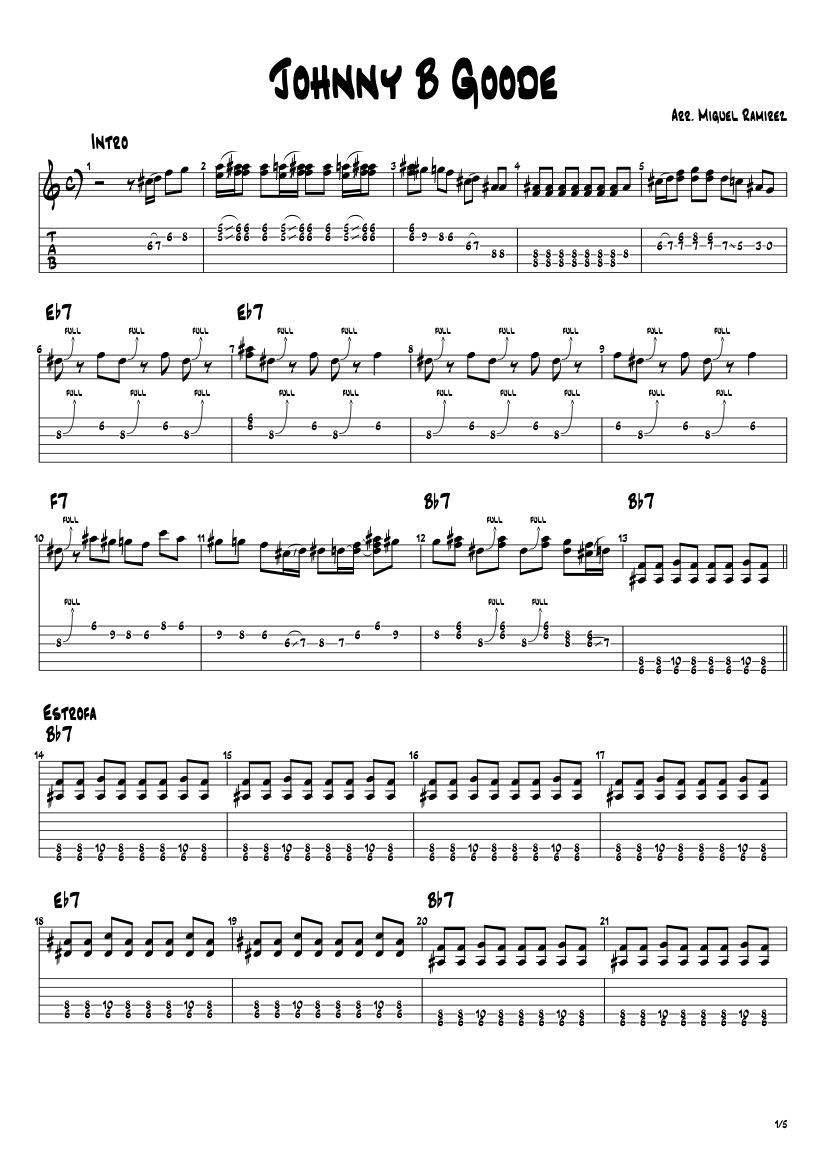
“Johnny B. Goode” by Chuck Berry is one of the most important rock and roll songs of the 1950s and one of the most recognizable guitar-driven tracks in popular music history. Released on March 31, 1958 by Chess Records, the song was written and performed by Chuck Berry and produced by Leonard Chess and Phil Chess. It was recorded on January 6, 1958, at Chess Studios in Chicago, with “Around and Around” as the B-side.
Musically, “Johnny B. Goode” is a classic rock and roll song built around one of the most famous electric guitar riffs ever recorded. The main instruments include electric guitar, piano, bass, and drums. The recording features Chuck Berry on vocals and guitar, Lafayette Leake on piano, Willie Dixon on bass, and Fred Below on drums. The combination of Berry’s sharp lead guitar, the swinging piano and drum backing, and the driving rhythm section helped define the sound of early rock and roll.
The lyrics tell the story of a poor country boy from the New Orleans area who plays guitar with extraordinary talent and dreams that one day his name will be “in lights.” The song is often described as one of the first rock and roll hits about rock and roll stardom itself. Although the character of Johnny is fictional, the story is partly autobiographical: Berry was born at 2520 Goode Avenue in St. Louis, and the song was initially inspired by pianist Johnnie Johnson, a regular member of Berry’s band.
“Johnny B. Goode” became a major hit for Chuck Berry. It reached No. 2 on Billboard’s Hot R&B Sides chart and No. 8 on the pre-Hot 100 Billboard pop chart, helping establish Berry as one of the key architects of rock and roll. Its guitar introduction, storytelling lyrics, and energetic performance made it a blueprint for generations of rock musicians.
One curiosity about the song is that Berry originally wrote the lyric as “colored boy,” but changed it to “country boy” to improve the song’s chances of being played on radio. Another important detail is the opening guitar riff: it borrows from the single-note solo in Louis Jordan’s 1946 song “Ain’t That Just Like a Woman,” played by guitarist Carl Hogan, showing how rhythm and blues ideas helped shape rock and roll guitar language.
The song’s legacy is extraordinary. “Johnny B. Goode” was included on the Voyager Golden Record, launched into space aboard the Voyager spacecraft in 1977 as part of a collection representing human culture. It was also inducted into the Grammy Hall of Fame in 1999 and included in the Rock and Roll Hall of Fame’s 500 Songs That Shaped Rock and Roll.
Another famous cultural moment came from the 1985 film Back to the Future, where Marty McFly performs “Johnny B. Goode” at a high school dance. The scene humorously imagines the song being introduced before its real historical release, turning it into one of cinema’s most famous rock and roll moments.
Lyrics
Deep down in Louisiana, close to New Orleans
Way back up in the woods among the evergreens
There stood a log cabin made of earth and wood
Where lived a country boy named Johnny B. Goode
Who never ever learned to read or write so well
But he could play a guitar just like a-ringin' a bell
Go, go
Go, Johnny, go, go
Go, Johnny, go, go
Go, Johnny, go, go
Go, Johnny, go, go
Johnny B. Goode
He used to carry his guitar in a gunny sack
Go sit beneath the tree by the railroad track
Oh, the engineers would see him sittin' in the shade
Strummin' with the rhythm that the drivers made
People passin' by they would stop and say
Oh my, but that little country boy can play
Go, go
Go, Johnny, go, go
Go, Johnny, go, go
Go, Johnny, go, go
Go, Johnny, go, go
Johnny B. Goode
His mother told him: Some day you will be a man
And you will be the leader of a big old band
Many people comin' from miles around
To hear you play your music 'till the Sun go down
Maybe someday your name will be in lights
Sayin': Johnny B. Goode tonight
Go, go
Go, Johnny, go
Go, go, go, Johnny, go
Go, go, go, Johnny, go
Go, go, go, Johnny, go
Go
Johnny B. Goode