
Description
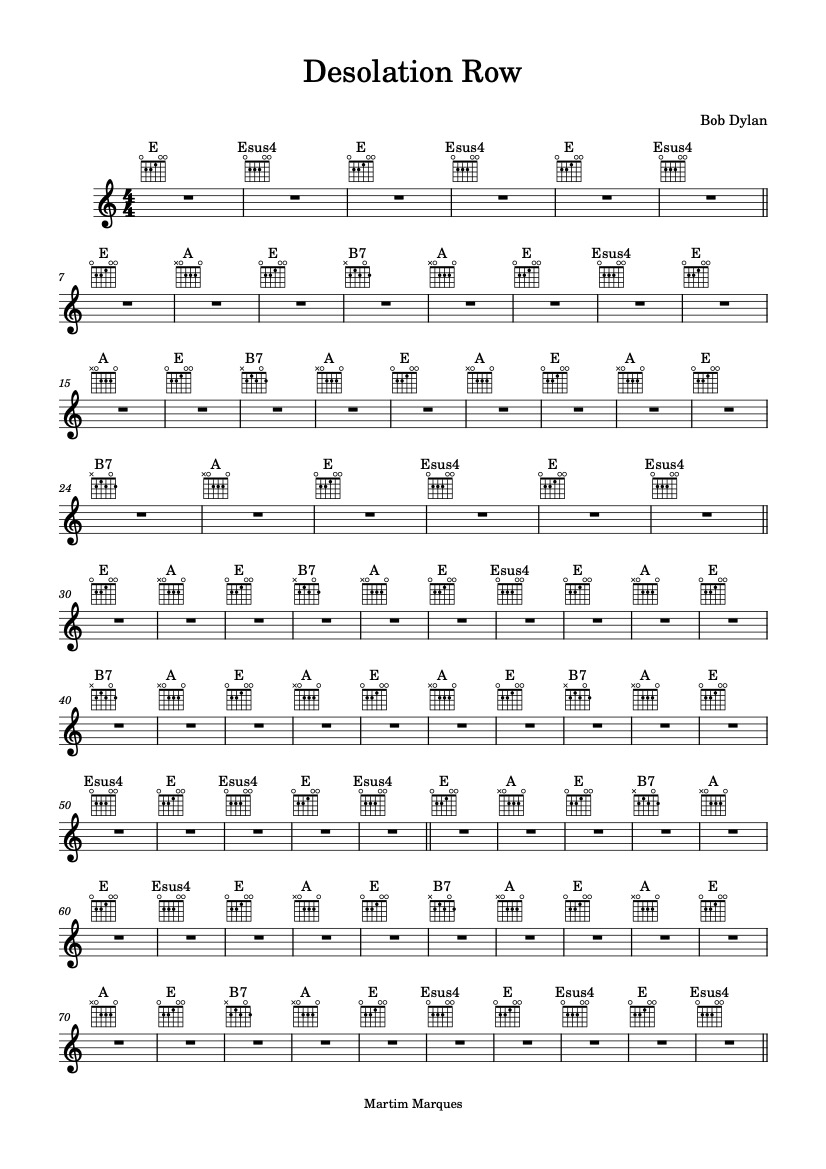
“Desolation Row” by Bob Dylan is an 11-minute folk rock song from his 1965 album Highway 61 Revisited. It was recorded on August 4, 1965 at Columbia Studio A in New York City and released on August 30, 1965 as the album’s closing track. The song was written by Bob Dylan, produced by Bob Johnston, and released through Columbia Records.
Musically, “Desolation Row” is unusual within Highway 61 Revisited because, although the album is famous for Dylan’s electric rock sound, the final released version of this song is mainly acoustic. Its core sound is built around Dylan’s vocal delivery, acoustic guitar, and bass guitar, with a long, hypnotic folk-rock structure that supports the song’s surreal lyrics. The article highlights Charlie McCoy’s improvised acoustic guitar part and Russ Savakus on bass guitar as key elements of the released recording.
The song’s arrangement creates a spacious, wandering atmosphere. Instead of using a compact pop structure, “Desolation Row” unfolds like a long poetic ballad, with Dylan moving through a series of strange, symbolic scenes. Its length, 11 minutes and 21 seconds, was remarkable for popular music at the time and helped make the track feel more like a literary journey than a conventional radio song.
Lyrically, “Desolation Row” is one of Dylan’s most surreal and ambitious compositions. The article describes the lyrics as a series of vignettes suggesting entropy and urban chaos. Dylan fills the song with historical, biblical, literary, and fictional characters, including Cinderella, Romeo, Ophelia, Noah, Cain and Abel, Einstein, Nero, T. S. Eliot, and Ezra Pound, creating a dreamlike world where culture, history, and social collapse all seem to meet.
One curiosity about the song is that it was first attempted in an electric version. Dylan recorded an early take on July 29, 1965, with Harvey Brooks on electric bass and Al Kooper on electric guitar. That version was not used on Highway 61 Revisited, but it was eventually released in 2005 on The Bootleg Series Vol. 7: No Direction Home: The Soundtrack.
Another interesting detail is the role of Charlie McCoy. The Nashville-based guitarist happened to be in New York when producer Bob Johnston invited him to contribute an improvised acoustic guitar part. The article notes that author Mark Polizzotti considered McCoy’s fills essential to the song’s success, because they add musical “shading” to Dylan’s huge lyrical canvas.
The meaning of “Desolation Row” has been debated for decades. When asked where Desolation Row was located, Dylan jokingly said it was “some place in Mexico” across the border. Al Kooper later suggested it referred to a rough area of Eighth Avenue in Manhattan, while Polizzotti suggested the title may have been influenced by Jack Kerouac’s Desolation Angels and John Steinbeck’s Cannery Row.
A darker curiosity is the possible connection between the opening lyric about “postcards of the hanging” and the 1920 lynching of three Black men in Duluth, Minnesota, Dylan’s birthplace. The article notes that photo postcards of the lynching were sold, and that Dylan’s father lived near the scene as a child. This possible historical reference adds a disturbing layer to the song’s already haunting imagery.
“Desolation Row” has been praised as one of Dylan’s most ambitious works. Critics have described it as a long, poetic, surreal ballad without a clear linear narrative. In 2010, Rolling Stone ranked it No. 187 on its list of the 500 Greatest Songs of All Time, and in the 2021 revision it rose to No. 83.
The song also became important in Dylan’s live history. He debuted “Desolation Row” at Forest Hills Tennis Stadium in Queens, New York, on August 28, 1965, shortly after his controversial electric performance at Newport Folk Festival. Live versions later appeared on several Dylan releases, including MTV Unplugged and The Bootleg Series Vol. 4: Bob Dylan Live 1966.
Another notable curiosity is its later cover by My Chemical Romance for the 2009 Watchmen film soundtrack. Their version transformed Dylan’s long acoustic folk-rock epic into a short, fast punk rock and pop-punk recording, released by Reprise and Warner Sunset. The cover reached No. 1 on the UK Rock & Metal Singles chart, showing how Dylan’s song could be reimagined for a completely different generation and genre.
Lyrics
They're selling postcards of the hanging
They're painting the passports brown
The beauty parlor is filled with sailors
The circus is in town
Here comes the blind commissioner
They've got him in a trance
One hand is tied to the tight-rope walker
The other is in his pants
And the riot squad they're restless
They need somewhere to go
As lady and I look out tonight
From desolation row
Cinderella, she seems so easy
It takes one to know one -, she smiles
And puts her hands in her back pockets
Bette Davis style
And in comes Romeo, he's moaning
You belong to me I believe
And someone says: You're in the wrong place, my friend
You better leave
And the only sound that's left
After the ambulances go
Is Cinderella sweeping up
On Desolation Row
Now the moon is almost hidden
The stars are beginning to hide
The fortunetelling lady
Has even taken all her things inside
All except for Cain and Abel
And the hunchback of Notre Dame
Everybody is making love
Or else expecting rain
And the good samaritan, he's dressing
He's getting ready for the show
He's going to the carnival tonight
On desolation row
Now Ophelia, she's 'neath the window
For her I feel so afraid
On her twenty-second birthday
She already is an old maid
To her, death is quite romantic
She wears an iron vest
Her profession's her religion
Her sin is her lifelessness
And though her eyes are fixed upon
Noah's great rainbow
She spends her time peeking
Into desolation row
Einstein, disguised as Robin Hood
With his memories in a trunk
Passed this way an hour ago
With his friend, a jealous monk
He looked so immaculately frightful
As he bummed a cigarette
Then he went off sniffing drainpipes
And reciting the alphabet
Now you would not think to look at him
But he was famous long ago
For playing the electric violin
On Desolation Row
Dr. Filth, he keeps his world
Inside of a leather cup
But all his sexless patients
They're trying to blow it up
Now his nurse, some local loser
She's in charge of the cyanide hole
And she also keeps the cards that read
Have mercy on his soul
They all play on penny whistles
You can hear them blow
If you lean your head out far enough
From desolation row
Across the street they've nailed the curtains
They're getting ready for the feast
The Phantom of the Opera
A perfect image of a priest
They're spoonfeeding Casanova
To get him to feel more assured
Then they'll kill him with self-confidence
After poisoning him with words
And the phantom's shouting to skinny girls
Get outa here if you don't know
Casanova is just being punished for going
To Desolation Row
Now at midnight all the agents
And the superhuman crew
Come out and round up everyone
That knows more than they do
Then they bring them to the factory
Where the heart-attack machine
Is strapped across their shoulders
And then the kerosene
Is brought down from the castles
By insurance men who go
Check to see that nobody is escaping
To Desolation Row
Praise be to nero's neptune
The titanic sails at dawn
And everybody's shouting
Which side are you on?
And Ezra Pound and T. S. Eliot
Fighting in the captain's tower
While calypso singers laugh at them
And fishermen hold flowers
Between the windows of the sea
Where lovely mermaids flow
And nobody has to think too much
About Desolation Row
Yes, I received your letter yesterday
(About the time the door knob broke)
When you asked how I was doing
Was that some kind of joke?
All these people that you mention
Yes, I know them, they're quite lame
I had to rearrange their faces
And give them all another name
Right now I can't read too good
Don't send me no more letters no
Not unless you mail them
From Desolation Row
Youtube Video
Social Links
Song
Description
“Desolation Row” by Bob Dylan is an 11-minute folk rock song from his 1965 album Highway 61 Revisited. It was recorded on August 4, 1965 at Columbia Studio A in New York City and released on August 30, 1965 as the album’s closing track. The song was written by Bob Dylan, produced by Bob Johnston, and released through Columbia Records.
Musically, “Desolation Row” is unusual within Highway 61 Revisited because, although the album is famous for Dylan’s electric rock sound, the final released version of this song is mainly acoustic. Its core sound is built around Dylan’s vocal delivery, acoustic guitar, and bass guitar, with a long, hypnotic folk-rock structure that supports the song’s surreal lyrics. The article highlights Charlie McCoy’s improvised acoustic guitar part and Russ Savakus on bass guitar as key elements of the released recording.
The song’s arrangement creates a spacious, wandering atmosphere. Instead of using a compact pop structure, “Desolation Row” unfolds like a long poetic ballad, with Dylan moving through a series of strange, symbolic scenes. Its length, 11 minutes and 21 seconds, was remarkable for popular music at the time and helped make the track feel more like a literary journey than a conventional radio song.
Lyrically, “Desolation Row” is one of Dylan’s most surreal and ambitious compositions. The article describes the lyrics as a series of vignettes suggesting entropy and urban chaos. Dylan fills the song with historical, biblical, literary, and fictional characters, including Cinderella, Romeo, Ophelia, Noah, Cain and Abel, Einstein, Nero, T. S. Eliot, and Ezra Pound, creating a dreamlike world where culture, history, and social collapse all seem to meet.
One curiosity about the song is that it was first attempted in an electric version. Dylan recorded an early take on July 29, 1965, with Harvey Brooks on electric bass and Al Kooper on electric guitar. That version was not used on Highway 61 Revisited, but it was eventually released in 2005 on The Bootleg Series Vol. 7: No Direction Home: The Soundtrack.
Another interesting detail is the role of Charlie McCoy. The Nashville-based guitarist happened to be in New York when producer Bob Johnston invited him to contribute an improvised acoustic guitar part. The article notes that author Mark Polizzotti considered McCoy’s fills essential to the song’s success, because they add musical “shading” to Dylan’s huge lyrical canvas.
The meaning of “Desolation Row” has been debated for decades. When asked where Desolation Row was located, Dylan jokingly said it was “some place in Mexico” across the border. Al Kooper later suggested it referred to a rough area of Eighth Avenue in Manhattan, while Polizzotti suggested the title may have been influenced by Jack Kerouac’s Desolation Angels and John Steinbeck’s Cannery Row.
A darker curiosity is the possible connection between the opening lyric about “postcards of the hanging” and the 1920 lynching of three Black men in Duluth, Minnesota, Dylan’s birthplace. The article notes that photo postcards of the lynching were sold, and that Dylan’s father lived near the scene as a child. This possible historical reference adds a disturbing layer to the song’s already haunting imagery.
“Desolation Row” has been praised as one of Dylan’s most ambitious works. Critics have described it as a long, poetic, surreal ballad without a clear linear narrative. In 2010, Rolling Stone ranked it No. 187 on its list of the 500 Greatest Songs of All Time, and in the 2021 revision it rose to No. 83.
The song also became important in Dylan’s live history. He debuted “Desolation Row” at Forest Hills Tennis Stadium in Queens, New York, on August 28, 1965, shortly after his controversial electric performance at Newport Folk Festival. Live versions later appeared on several Dylan releases, including MTV Unplugged and The Bootleg Series Vol. 4: Bob Dylan Live 1966.
Another notable curiosity is its later cover by My Chemical Romance for the 2009 Watchmen film soundtrack. Their version transformed Dylan’s long acoustic folk-rock epic into a short, fast punk rock and pop-punk recording, released by Reprise and Warner Sunset. The cover reached No. 1 on the UK Rock & Metal Singles chart, showing how Dylan’s song could be reimagined for a completely different generation and genre.
Lyrics
They're selling postcards of the hanging
They're painting the passports brown
The beauty parlor is filled with sailors
The circus is in town
Here comes the blind commissioner
They've got him in a trance
One hand is tied to the tight-rope walker
The other is in his pants
And the riot squad they're restless
They need somewhere to go
As lady and I look out tonight
From desolation row
Cinderella, she seems so easy
It takes one to know one -, she smiles
And puts her hands in her back pockets
Bette Davis style
And in comes Romeo, he's moaning
You belong to me I believe
And someone says: You're in the wrong place, my friend
You better leave
And the only sound that's left
After the ambulances go
Is Cinderella sweeping up
On Desolation Row
Now the moon is almost hidden
The stars are beginning to hide
The fortunetelling lady
Has even taken all her things inside
All except for Cain and Abel
And the hunchback of Notre Dame
Everybody is making love
Or else expecting rain
And the good samaritan, he's dressing
He's getting ready for the show
He's going to the carnival tonight
On desolation row
Now Ophelia, she's 'neath the window
For her I feel so afraid
On her twenty-second birthday
She already is an old maid
To her, death is quite romantic
She wears an iron vest
Her profession's her religion
Her sin is her lifelessness
And though her eyes are fixed upon
Noah's great rainbow
She spends her time peeking
Into desolation row
Einstein, disguised as Robin Hood
With his memories in a trunk
Passed this way an hour ago
With his friend, a jealous monk
He looked so immaculately frightful
As he bummed a cigarette
Then he went off sniffing drainpipes
And reciting the alphabet
Now you would not think to look at him
But he was famous long ago
For playing the electric violin
On Desolation Row
Dr. Filth, he keeps his world
Inside of a leather cup
But all his sexless patients
They're trying to blow it up
Now his nurse, some local loser
She's in charge of the cyanide hole
And she also keeps the cards that read
Have mercy on his soul
They all play on penny whistles
You can hear them blow
If you lean your head out far enough
From desolation row
Across the street they've nailed the curtains
They're getting ready for the feast
The Phantom of the Opera
A perfect image of a priest
They're spoonfeeding Casanova
To get him to feel more assured
Then they'll kill him with self-confidence
After poisoning him with words
And the phantom's shouting to skinny girls
Get outa here if you don't know
Casanova is just being punished for going
To Desolation Row
Now at midnight all the agents
And the superhuman crew
Come out and round up everyone
That knows more than they do
Then they bring them to the factory
Where the heart-attack machine
Is strapped across their shoulders
And then the kerosene
Is brought down from the castles
By insurance men who go
Check to see that nobody is escaping
To Desolation Row
Praise be to nero's neptune
The titanic sails at dawn
And everybody's shouting
Which side are you on?
And Ezra Pound and T. S. Eliot
Fighting in the captain's tower
While calypso singers laugh at them
And fishermen hold flowers
Between the windows of the sea
Where lovely mermaids flow
And nobody has to think too much
About Desolation Row
Yes, I received your letter yesterday
(About the time the door knob broke)
When you asked how I was doing
Was that some kind of joke?
All these people that you mention
Yes, I know them, they're quite lame
I had to rearrange their faces
And give them all another name
Right now I can't read too good
Don't send me no more letters no
Not unless you mail them
From Desolation Row